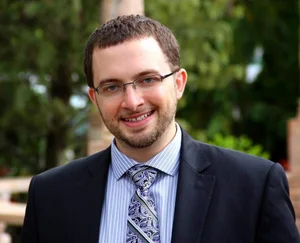
EP 116: Designing Hope in American Medicine | Ricardo Nuila
On today's episode, we are going to talk about designing hope in American medicine.
Dr. Ricardo Nuila works as an internal medicine doctor and hospitalist in his hometown of Houston. It’s hard for him to imagine practicing medicine anywhere else but at a safety-net hospital, where he focuses on a person’s healthcare problem. His experiences as a doctor gives his writing its fuel. Ricardo focuses mostly on health disparities, how policies affect real people, and the interface between art and medicine. He has written for Texas Monthly, VQR, The New York Times Sunday Review, The Atlantic.com, and The New England Journal of Medicine. He has also covered Hurricane Harvey and the COVID pandemic for The New Yorker. His short stories have appeared in the Best American Short Stories anthology as well as in McSweeney’s and other literary magazines. The New England Review published one of his short stories and awarded him with its inaugural Emerging Writer’s Award. Ricardo directs the Humanities Expression and Arts Lab (HEAL) at Baylor College of Medicine. This lab develops educational materials and experiences that weave the arts and humanities into medical education.
Episode mentions and links:
Made to Care For Those Left Behind, This Hospital Leads the Way (Book Review via NYT)
Humanities Expressions and Arts Lab (HEAL)
Ricardo’s restaurant rec: Nancy’s Hustle
Follow Ricardo: Twitter | Instagram | LinkedIn | Facebook
Episode Reflection
Before we started making this show, I had never put much thought into the concept of clinicians who are also writers. Sure, some of my favorite books were written by doctors, like Checklist Manifesto by Atul Gawande, but my appreciation for the unique take was about as deep as I went. Producing Design Lab has given me the opportunity to learn from and study so many amazing individuals who are both clinicians and storytellers. And because of this, I have a newfound appreciation for the role of storytelling in medicine, not just as a tool for building empathy, but as a critical component of care that allows us to examine our own perspectives, understand the world in which we exist, and imagine a better and more just future. As Ricardo stated so well this week, “Today I can say that when I'm writing, I feel like I'm working on medicine. And when I'm working in the hospital taking care of patients, I feel like I'm helping my writing skills.” Storytelling and medicine certainly go together. And these days I find it difficult to imagine one without the other.
This week, there was one particular thing that Ricardo said that really jumped off the page. Leave it to a physician/writer who works in a public hospital treating the most marginalized members of our society to present, in my opinion, the best description of empathy, in the context of human-centeredness, I’ve ever read.
“There is this connotation of empathy that it's so emotional, and a lot of it is, but so much of it is imaginative and intellectual. You're really trying to imagine certain thoughts, thought processes that people have, and connect. And the more you connect with people, the more you can formulate those thoughts and think through that person's brain, even in intellectual kind of spheres -- you spend time with people and you start to say, okay, I think I understand how this person sees the world.” - Ricardo Nuila
What do you think about Ricardo’s explanation of empathy? Leave your thoughts in the comments on Apple Podcasts!
Written by Rob Pugliese
-
Bon Ku: On today's episode, we are going to talk about designing hope in American medicine. I'm Bon Ku, the Host of Design Lab. It's a podcast that explores the intersection of design and health. Our guest is Dr. Ricardo Nuila he works as an internal medicine doctor and hospitalist in his hometown of Houston.
Where I actually lived for a little bit growing up. Ricardo's experiences as a doctor gives his writing it's fuel. He focuses on health disparities, how policies affect real people, and the interface between art and medicine. He has written for the Texas monthly, the New York Times Sunday Review, The Atlantic. New England Journal of Medicine, and New Yorker. His writing has appeared in the best American Short Stories Anthology, McSweeney's, New England Review and other literary magazines. Ricardo directs the Humanities Expression and Arts Lab at Baylor college of medicine. They focus on developing educational materials and experiences that weave the arts and humanities and medical education.
Go to designlabpod.com that's our website. You will find show notes from each week. Learn more about the guests get links to related contact. There's a link there for our newsletter. Each week, our producer, Rob Pugliese will send you his reflection on the podcast. And you will get notes and links right into your email inbox whenever a new episode drops.
Reach out to me on Twitter at B O N K U on Instagram at D R B O N K U. Please send us your recommendation for guests who you think should be on the podcast. And while you're there, give us five stars and apple podcasts and Spotify, leave us review, follow us. Tell someone about the podcast. Now my conversation with Dr. Ricardo Nuila
Interview
Bon Ku: dr. Ricardo Nuila, welcome to Design Lab. I'm thrilled to have you on the show.
Ricardo Nuila: Thanks so much for having me. This is awesome to be here.
Bon Ku: You have two passions, doctoring and writing. How do you combine these passions? Cuz they're like full-time passions.
Ricardo Nuila: The trick is that I see them as one passion now. You know, it's like when I feel, I mean, it has gotten a long, it has taken a long time to get there, but. Today I can say that when I'm writing, I feel like I'm working on medicine. And when I'm working in the hospital taking care of patients, I feel like I'm helping my writing skills.
And so to get there, it's taken years and mentality change and full, you know, all these things. But yeah, that's, I feel fortunate for that right now.
Bon Ku: Doing my research. You majored in English at Georgetown University? Correct. And you were torn between going to medical school, becoming a writer. Is that right?
Ricardo Nuila: That's, that's, that's exactly what happened. I was born into a family of doctors, like my dad's a doctor, my uncle, his dad, my grandfather. And so it was like one of those things where like the path was laid out for me. And it wasn't that they put pressure on me, but it was just like, you just grow up going to hospitals with your dad and you're just like, this is just, why not?
You know?
Bon Ku: was he was obgyn.
Ricardo Nuila: He was an ob, B G Y N in Houston. And that's, it just became a pursuit too. You know, you know how medical school is, it's just that you, you, you have to pursue it. But when I got to college, I just realized that, you know, I took my first bio class and I was like, I don't know if I can, I like to memorize that much, you know?
Bon Ku: Oh, that sounds like me.
Ricardo Nuila: I know it, it, I liked it, but I wasn't, it just didn't resonate with me as much as my English classes. And so I said, you know what? I'm just gonna screw it. I'm just gonna be an English major and let the chips fall where they may. But I, I think I can still get into medical school as an English major, and I did all my pre-med.
alongside it. But when it got down to the point of, you know, I got into the medical school that I needed, I took the MCAT and scraped by and got into the school that I wanted to get into, and it was just like, at that point it, it was just like, wait a minute. If I go to medical school, I'm gonna sell out on being a writer and I kind of really want to try this. So I went to my, a professor who taught script writing. the script writing and dialogue class. One of the hardest classes that I've taken, even including organic chemistry and everything. Cuz it's like, you have to write like for the stage and you have to, it takes time and, and, and you have to think about all the directions.
And so I went to him and I said, I'm thinking about leaving my. Medical school admission because I, I wanna write, and I was like, totally expecting him to say like, go forth, watch Woody Allen movies, you know, like, you're gonna be great. You're gonna do well. But he said You'd be crazy to leave medicine.
that's when I felt the chip on my shoulder and I was just like, he just thinks I'm a bad writer. but he explained it, he said you can go to graduate school in English and learn technique, but where are you gonna get your stories from? You need stories. And, and I mean, that advice that has stuck with me.
I'm not gonna say that it was like, a clear launch from that moment on. I had to turn it over in my head. But that has really been one of the fundamental advices for me, and, and it's shaped the way I look at medicine too.
Bon Ku: Now I can understand how being a physician can help you become a better writer cause it gives you these stories. but how does writing make you a better physician?
Ricardo Nuila: Well, I think that you have to demonstrate so much empathy when you're writing. You have to conceive of a reader on the other side, like receiving those words, you have to help them visualize what you're writing. You have to hit the right notes of tone. You have to be engaging and you have to have a point.
So it's helped me think about how I deliver my messages with patients. And it's also, you have to do it efficiently. You have to communicate in a way that's visual, effectively, and, you know, with a deadline. Because that's what writing is. You can't just keep on writing and writing and writing. If you're writing a scene, it has to have a, like a dramatic structure and it has to end.
If you're writing dialogue, there's rules for like, you know, how you write dialogue, 12 syllables in a line, things like that. And I, those have helped me with communication with, with patients.
Bon Ku: How do you code switch between writing fiction and non-fiction? Because don't, most writers just kind of write, they're like non-fiction writers or fiction writers, but you do both.
Ricardo Nuila: I do both, and I've, last years I've been dedicated to this book that's non-fiction. I feel myself going back to fiction and I guess it's, kind of like the way you look at building a structure and like, what is the material that you need for that story? So, if the reason that the structure exists has to do with X, Y, Z, like, okay, I'm building a house.
It's a beach house. And so what we need to do with this beach house is have it near the ocean. You're have views. You decide on the materials, you decide on things based on that. It's the same thing with fiction and nonfiction, which is like, with this book, it became evident to me that it was so much about the question of like, why these people go through what they do, and it had to be nonfiction then because the end product is like, wait, I need to ground this in real, like research and argumentation.
This has to resonate with people as not just a imagined person's story, but as happening every day in America. And so when that kind of came together, that's when it was like non-fiction became clearly the route to use. But there's other bigger question, you know, there's other bigger pursuits or bigger structures that you decided, you know what, I, maybe I need to tell this using the fiction lens because.
You're trying to convey some other type of truth.
Bon Ku: Hmm. Let's talk about your new book. It's called The People's Hospital Hope and Peril In American Medicine, you follow the lives of five people who are uninsured in Houston. What was your inspiration for writing the book? How long did it take you to write it as well?
Ricardo Nuila: Took me like anywhere from. Five and a half to six, seven years. I mean, it's hard to tell when one project kind of ended and this became , the beginning, because just been going on for a while. But the inspiration was a, just the people that I saw in the hospital, you know, the, just the people that I connected with, the patients.
It was clear that these stories were just so dramatic and also so tragic, so comedic too. You know how it is. There's like, there's all of the world in medicine and I was just like, people don't know these stories. And so it, kind of started off as like, I want to do an artistic rendering of these people's stories, you know, and kind of, at first I was like, you know what?
I'm gonna portray these stories and let it be. You know, it's, people can make sense of it as they want,
Bon Ku: Wait, so it was gonna be fiction originally.
Ricardo Nuila: So I did start off like, actually I have a book of short stories that are fiction.
Bon Ku: Uh,
Ricardo Nuila: And then I just went into this project that is non-fiction and I was like, well, you know what?
These are gonna be interwoven non-fiction stories. Like journalistically told, but written with the pros of something like fiction, but still like there. It wasn't like, there wasn't me in this book. There wasn't my father's story. There wasn't like, history there was so much lacking and that's when I started to as I mentioned,I need to like commit to this non-fiction and it needs to be blaringly clear that this structure is non-fiction with history what are all of the circumstances and the histories that has led us to the point where this person is in this emergency room feeling this, you know? And so in creating that structure for nonfiction. That's where I had to like say, okay, double down on it really.
Bon Ku: Yeah. And talk about empathy. You really had to get into the head space, the mental space of one of these patients.
Ricardo Nuila: Yeah, I, that's one of the things that I really enjoy and I think that comes from writing also. There is this connotation of empathy that it's so emotional and a lot of it is, but so much of it is imaginative and intellectual. Like you're really trying to imagine certain thoughts, thought, processes that people have, you know, and connect. And, and the more you connect with people, the more you can formulate those thoughts and, think of, through that person's brain, even in intellectual kind of spheres, you know? So, yeah, that's one of the enjoyable things cuz you spend time with people and you start to say, okay, I think I understand how this person sees the world.
And, and you realize that, that it's just like, I mean, everybody has their worldview, you know, and everybody's just very different. and it's very enjoyable to see that.
Bon Ku: Let's talk about one of these patients, Roxanne, highlights chronic versus emergency care this artificial divide that we had, and I have taken care of patients just like
Ricardo Nuila: Roxanne
Wow. Wow.
Bon Ku: All the time, and it drives me crazy of the injustice. So, who, who is Roxanne and what did she go through?
Ricardo Nuila: Yeah. Well, Roxanne is an immigrant. She came to the United States to Houston from El Salvador, which is where my parents, immigrated from. She came without papers and established herself in Houston. I mean, one of those stories where she came to Houston and got a job the next day and she for years worked at Sax Fifth Avenue, had health insurance from there.
Ended up moving back and forth between different jobs. Ended up being a caretaker for the know, the elderly of the wealthy who didn't have caretakers. Right. She, at one point in her life, she started to Stomach pain she was in her fifties at this time.
Stomach pains and vomit. She started to lose a lot of weight. One of her friends, the moment she sees her after nine months of not seeing her, she lays eyes on her and she says, I have to take you to the hospital now. That's how vanquished she looked. And what they discover is just that she has this tumor that is arising from her inferior vena cava that wraps around her heart and her liver and is causing her heart failure. So she's an emergency condition.
Bon Ku: Yeah,
it would literally kill her if she,
nothing was done.
Ricardo Nuila: if nothing was done, she would die. She would die of like heart failure. She's starting to, you know, fluid in her lungs. Just heart failure. And what, what happened is, that's what's one of the extraordinary things about the American healthcare system is that she's in Houston, Texas and literally , the best cardiac tumor surgeon in the world is here and can excise this tumor and she happens to be able to be transferred to this hospital under emergency conditions to have it taken out, but she suffers this extraordinary complication. It's not common, but it does happen, especially when people are connected to the cardiopulmonary bypass machine that the cytokines are released once the tumors are incised and the circulation clamps down on the extremities to divert the circulation to the vital organs, and she wakes up and realizes that her arms and legs are black.
Bon Ku: mm.
Ricardo Nuila: They're starting to die cause she has dry gangrene from like the complications. So, so her life is saved but she wakes up and she knows she has no limbs. So she's going through a lot emotionally there, of course. But, our American healthcare system will give the opportunity to take these moonshots where we can excise these tumors.
Extraordinary things that surgeons can do to do that. But she changes from an emergency care patient . Who doctors and hospitals can tap into emergency Medicaid for to a chronic care patient. And that's where she runs into major problems in terms of how to get these dead limbs off of her body.
Bon Ku: Hmm. And so she just suffers and can't get care for like routine care afterward. Is that right?
Ricardo Nuila: Yeah. So the doctors at the hospital have to discharge her. They say they can't tap into any money to fund her. They don't have any plan for follow up because she doesn't have insurance. There's just no way to connect her to primary care, you know, so, they can give her an appointment for primary care, but it, they just know that she can't get there.
She cannot like, you know, afford it. She even says, what am I supposed to do about these dead limbs? And like, let them fall off like limbs from a tree would fall off. And, and they don't say anything, you know? So she's discharged home. She goes home.
She's under hospice care because I get it. That is the, only mechanism that hospitals can have to figure out that they can give some sort of care to patients, you know? And so but she's not actively dying. She has much more than like a year, you know, prognosis. So what happens is, is that there's a public healthcare system in Houston.
There's the Harris Health System, which is funded through property taxes, which is that can care for the For the uninsured. And even though in her neighborhood, there is this enormous private hospital that deals with amputations and whatnot, she can only come to the public hospital. I don't know what people in her condition would do outside of Harris County.
And I know it's state by say so complex in America. But that's her story that she arrives at our hospital and she can get care, and I know that there are patients who suffer things that are, as you know, weighty as what she suffers that live in Texas, outside of this county, and I don't know what they do.
Bon Ku: Yeah, because you work at Ben Taub is which of one of the safety net And there's a funding mechanism for you to provide chronic care for patients who are uninsured or who don't lack insurance or who are underinsured. They still have insurance, but it's a terrible type of insurance that doesn't cover much at all.
Ricardo Nuila: which is becoming more and more common in America, right? It's like the underinsured is growing so much and, but yes, we have a funding mechanism where it's a public healthcare system that utilizes property taxes. So I pay into it. I own property in the county. I pay into it.
We utilize those property taxes for a healthcare system, which involves satellite clinics, specialty clinics throughout the city, hospitals where, you know, care is coordinated like that. And this book is as much to tell the story of people like Roxana as much as to show that we can do something about healthcare in America.
We're just so in the dark about it. I had to like, I had to like research. I was practicing in this. I didn't know so much
Bon Ku: none, of us knew who, who enter. There's, we don't take a class on it in medical school. We don't learn about the financing of, of healthcare and how we got into this mess and like, how do we get into this mess? Like, what's that, what's that story?
Ricardo Nuila: Yeah. that was one of the, the most. Interesting parts of the research because I feel like research is about like just finding the right books and you can just sniff around for the right books and not find 'em until you finally come across the right one. And I came across a Philadelphia native, Paul Starr, who wrote the Social Transformation of American Medicine 1983 book
Bon Ku: I have that book on my bookshelf somewhere around here, and I, I met Paul Star, before. Yeah, he's
great.
Ricardo Nuila: I would bow down to him if, because he, he wrote one of the most important books that really just showed , how medicine in the United States started off as like, kind of like a, like a little philosophy and grew into this mega, mega industry. And he does it by, with research, with historical arcs, everything.
But what I learned from that is, basically like how much this Was due to how doctors tried to consolidate power throughout the years, you know, and keep universal healthcare outside of the grasp of the American public so that they could a, yes they could have that relationship with patients and nothing could interfere.
But that also was linked to the financial incentive of being able to bill in a fee for service manner. And you. You, and I don't know this going into the profession, very few people know it even in the profession, but that's the history. That's the history. And we have to reckon with it. And we have to reckon that doctors played a big role in why American Healthcare is in the state.
That it's, and his, his thesis is really interesting because he says that the doctors gained so much power that, and then when corporatism came in, corporatism kind of like took it away from them. And we feel that so off. You know? I feel like that that's like the narrative that we're feeling right now, you know?
So I think his thesis has really kind of come true, you know?
Bon Ku: In design, we say form follows function, and I'm gonna quote my buddy, Dr. Brendan Car who says, in healthcare form follows finances.
Ricardo Nuila: Oh, gosh. that's a really nice quote. That's, that's unfortunately the world that we, I don't think that's the world that 90% of doctors want to necessarily want to go into when they choose medicine as a, I mean, there might be a thought of like, security and, you know, you can make a good living, but it's not to be like the capitalists. That really is the history of what, how, medicine has evolved in in the United States, which is that doctors became capitalists and very strong capitalists and held power. And that's one of the, the reasons that we are in the, the problems we have right now.
Bon Ku: Yeah, well, you and I both work in this broken system, but you're incredibly optimistic. How do we design for hope in American medicine?
Ricardo Nuila: Yeah, that's a great question. And I think that designing for hope means, you know, designing public systems, challenging our assumptions in America about what should be public and what should be private. That's one of the major points that I have in my book because it became so evident just how these, preconception in America is just that like, the public doesn't, we're not gonna do anything, even when in Obamacare when the idea of like the public option came up, you know, it was def it was just let go, you know, like of, of a public healthcare option, right? I think that to design, healthcare system, we need to understand that the public has a big say in it. And what we're feeling right now is the extreme of a private system without a counterbalance from public. That's one of the reasons I gain optimism in my, in my daily, because I work in a public system.
I feel the benefits of it and I'm not, you know, I try to think beyond what my experience is. I know that in England and the NHS where the weight is maybe a lot toward the public system, they're having their problems. Nothing's gonna be perfect, but what we feel, the experiences that we see our patients go through, that we we have to reckon with that, that this is a very extremely private system and one of the reasons that we're going through these experiences, that our patients are forced to go through these experiences.
Cause we don't have the counterweight of the public.
Bon Ku: Yeah, and we already have this ethic system around healthcare. So we have this law called EMTALA right? I quote it all the time. I don't even know what it stands for, but it, it's basically, every hospital has to provide emergency stabilizing care, regardless of a patient's ability to pay. We can't turn away a patient.
We have to provide emergency care, and I'm under a federal mandate to do that. Like I cannot turn away. I can't go, Hey, oh, you don't have insurance? We could turn you. have, if you're in a mord vehicle accident, I have to stabilize, I have to take care of you. But why don't we have EMTALA for chronic care?
You know, if, if you have a chronic disease, if you show up to clinic and like Roxana for example, you could be turned away if you don't have the ability to pay.
Ricardo Nuila: EMTALA is a great example to me of like just how our system has come together as patchwork, and it's not, thoughtfully put together in a way that is like trying to be as economical and as equitable as possible. You know, EMTALA happened because we had patient dumping in the 1980s, in the late seventies, in the eighties.
You would open up the New England Journal or Jama and you would read another case of like patient dumping, where a hospital, a private hospital, nonprofit, or for-profit hospital, And an un uninsured person, they would just dump that person onto like a public hospital.
And people died like that and they did study. And so, I think trying to take the bird's eye view, it's just like that doesn't situate well with like our concepts of liberties in this country. Right. If you're dumping patients at critical moments, your going against their liberties, you're taking away their liberty.
And so the patchwork is, well, let's just say in emergency conditions, then, you know, and again, there, there's all these special interests too, because, you know, the way to keep costs down is if all of us, like they're strength in numbers. If we had healthcare insurance for every single person like together on one big, big plan, whether that's Medicare for all, whether that there's like, a service that provides it for us, costs would go down, but there are, major forces that don't want those costs to go down, you know, and so this all becomes very complicated in how we've allowed it to unfurl like that.
And I think that EMTALA is just an example of that patch we're saying. Okay, let's just, say that your right is just to have emergency care, but it doesn't make any sense because that's the most expensive way to care for a person is under emergency condition.
Bon Ku: You are an educator in addition to being a hospitalist. So you take care of patients or admitted to the hospital, but you are at Baylor College of, the School of Medicine there, and you have a cool lab that's called the Humanities Expressions and Arts Lab. What do you do and tell us about, what that does for the medical students that you educate.
Ricardo Nuila: It's a new lab. It comes on the heels of a report released by the A M C in the middle of the pandemic. December, 2020, the A M C released a report
Bon Ku: what's the amc?
Ricardo Nuila: oh, I'm sorry. The Association of American Medical Colleges.
Bon Ku: Cool. Yeah. Do Doub, the governing body who dictates like what happens in medical school in the us.
Ricardo Nuila: They had released reports on the fundamental role of basic sciences, which is like everybody knows, is like, yeah, of course, basic sciences, but also social determinants of health. But their third report was about how the arts and humanities should be integrated into medical education.
And so this resonated with a whole group of people throughout the United States who had been working on that. I mean, there's people who have been working in medical humanities, narrative medicine, things that, if I try to, put my, like bird's eye view about it, it's really trying to, swing the pendulum a little bit less science-y for medicine, a little bit more art.
We all know that, in medicine, there's so many cases, so many that, that you can't just whittle down to numbers that it's like the gray zone. And I think that there's good reason why over the last a hundred years, the pendulum has swung a little bit more towards science. There's so many great, incredible advances, but, you know, I think that some of the challenges that we're feeling in our profession right now are because that pendulum has swung a little bit more toward science, you know, burnout for instance, is one of the reasons why the double A M C released this report is because people are start, losing their sense of meaning in the profession.
People are losing the ability to communicate with patients because when your mind is so programmed to think in numbers and in statistics, you can lose your way in how to convey that message at the bedside. You can start to think of the world as black and white and not gray, and it can be difficult to tolerate ambiguity. And that can create inner conflicts in you. Like, I don't get why this patient is not gonna get this surgery. You know? and that you, that can weigh on people and so,
Bon Ku: how does humanities help with that? Help people tolerate ambiguity?
Ricardo Nuila: Yeah. So when you are exposed to works of art, you have to engage with it and you have to understand that there's not just one right answer. Okay. And there's different ways of looking at different perspectives. So, for instance, some of the activities that we utilize is we, take internal medicine residents Wednesdays for art viewing at the Museum of Fine Arts in Houston, and they're, they see a portrait of two men together. And you know, the questions come up of like, are they a romantic couple? What's the evidence for that? Think about like the painter looking at this?
How would you think that this, uh, painter would've come across these people? And that is creating a visualization within people to reconcile the, artistic evidence. What we are seeing with like our own preconceptions of why we think, for instance, what we feel about this couple or, trying to reconcile like the lighting with the paint.
That's what Art gives us is these, tools for visualization, For thinking about people beyond their one dimension. We can start to think about like, the depth of this person. You know, why does this person wear jeans and, and like a tank top? I feel like in creative writing, that's what the narrative is doing. You're, you're writing in a cohesive manner, trying to put these possibly disparately linked kind of facts, like person's clothing, their accents together in a narrative that makes, shapes, it and makes sense so that it sounds like a real person, you know?
And I think that that is what allows us to get closer to the humanity of people, you know, where we can actually sit with a person, a patient, And use those tools to see the, you know, the individual idiosyncrasies that define that person and then maybe kind of calibrate our language and our communication to that person.
Bon Ku: Yeah. I love that. In the interview you said that medicine was such a beautiful field, and nowadays I think a lot of physicians maybe don't see it that way. That there is, what you said before, there's like this loss of meaning. What are some things that you do personally to help you keep that meaning in medicine.
Ricardo Nuila: I think that I keep my, you know, ears open for that dialogue. You know, I'm listening to the way people talk and trying to distinguish it from other accents, other manners of talking. So it's like, just having sensitivity towards humor, humor situations, that, that is such a fulfilling part of my day.
You know, when, when I recognize that somebody's funny for a certain reason, or when I recognize that like, I'll ask them. You know, it's like, where are you from? And whenever they say, if they say Mexico, that's not enough. You have to tell me exactly where in Mexico.
And I can ask questions to get to know that region a little bit better. You know, oh, are you all more into baseball or into soccer? You know, things like that. And that's like those helped me learn more about the world, you know, and in learning more about the world, that's just a positive tally for my day.
Right? I'm not saying that that's just. You know, I have bad days, and those bad days can be colored by emotions and everything, But these other things that I'm kind of like attuned to my mind toward are positive talliesand sometimes you'll hit people who are super interesting that you'll connect with them.
You'll feel appreciation, like, oh, you, you'll have like a 30 minute conversation. And you learn about a lot of things and then you're like, wow, this is just like so fulfilling. And I mean,
Bon Ku: Yeah.
Ricardo Nuila: Medicine's about people. So of course it's gonna be like bountiful. It's gonna be so many different things. It's just that we have so many different mechanisms that impede.
our connection with other people and it's like the billing or it's the, even if it's our own pressure that we put onto, whether or not we know everything about this diagnosis or, I feel like if we're just kind of connecting with people, we can rely on our education and our, care and things are going to usually be fine with
Bon Ku: that.
Yeah, I love that. I, I try to do that with my patients. It's hard to do in the emergency department, but you, I can't do it with every single patient, but if you just kind of, Ask a few more questions. You, you get to experience a depth of that human before you and their experiences. And I remember them better too.
And I remember that, oh, this person lived in Philadelphia for 50 years and worked in post office and have like five kids. And you could get that in just a few minutes. It takes a little extra time. But to me,
Ricardo Nuila: Yes.
Bon Ku: it humanizes me and makes it more interesting
Ricardo Nuila: And it keeps you going, I imagine,
Bon Ku: it does.
It does. Yeah. And I can't do that with every single patient,
but
Ricardo Nuila: can't, no, no, no. And I don't wanna paint that picture that it's like I think if people saw me on a daily basis, they would be surprised. Cuz I'm not like handholding patients for like 20
minutes because I, cuz honestly, I read people, I think I read people decently and they don't want you to
Bon Ku: Yeah, yeah,
yeah. Totally, totally.
Ricardo Nuila: They want you to listen and be attentive and connect in that manner and be like, I'm on track with you.
I'm going, you know, so I, I do it very like,
Bon Ku: yeah. yeah. yeah. You could do that quickly. Like there, there's a way, there's a script that you can, you know, use that you could do it quickly.
Ricardo Nuila: There is. And I think language makes so much, and body language is part of it, but I think that communication, that's one of the major things that we do in the Heal lab is like give communications courses. For faculty that are, really not your corporate communications kind of like, curriculums, which is just like, you know, like memorize them acronyms and real, it's just more like, like how do you connect with people and how do you demonstrate that in your words, you know, and, and still going through evidence-based stuff.
But like that being the foundation. I mean, we also, have a medical humanities hour for internal medicine residents. We have a pathway for medical students so that they're exposed to different arts and, and everything. You know, I think that's a lot of it is to build the foundation so that they can apply meaning to their world, to their careers, you know?
Bon Ku: I used to live in Houston. where you are at, I know there's so many great places to eat. If one of our listeners were to visit you, where would you take them out to eat?
Ricardo Nuila: Well, it depends on the, on so many things, like that's just my internal medicine answer for, you have to like, you have to contextualize everything you know. I mean, 99 times out of a hundred, I would take them to Nancy's Hustle, which is like one of my favorite all-time restaurants and it happens to be here in Houston.
But it's this,
Bon Ku: Why is it so good?
Ricardo Nuila: because it's just the food and the vibe just like goes so well together. They're like two helices in a DNA, you know, just like. what I understand is like the name of it like a bar that appeared in Mad Max. So it has like a neo kind of glossy Mad Max feel.
It's not like Thunderdome, but it feels kind of like, wow there's like, the food is in extraordinary, and the people who work there like really literally come from all over the country to work as part of that. It's like a youthful vibe of people who are just wanting to make the restaurant as good as it as it can be.
Bon Ku: Well, I, I love that. Next time I go to Houston, can we go out there and, and I'll bring, I'll bring a copy of the People's Hospital and I want you to sign it.
Ricardo Nuila: Would be my delight to like to go out there and it'll be, I promise you, you will love the restaurant.
Bon Ku: All right, let's, let's do it. We'll put a link to your book in the show notes. Buy it. It's amazing. You don't have to be in medicine to appreciate it. You will appreciate the humanity, in the, five people that you profile, in the book. So thanks. Thanks so much for coming on the show.
Ricardo Nuila: Oh, thank you so much. This has been awesome. Thank you so much for having me. This has been a great conversation.
Bon Ku: You can follow Ricardo Nuila on Twitter and Instagram. He is present on both of those channels. His account is at R I C O N U I L A. Design Lab is produced by Rob Pugliese, editing by Fernando Queiroz. Our theme music was created by Emmanuel Houston and the cover design by Eden Lew. See you next week.