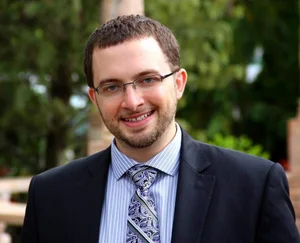
EP 119: Designing Dementia Care | Sandeep Jauhar
This week, we are talking about designing better dementia care.
Sandeep Jauhar has written several bestselling books, all published by Farrar, Straus, and Giroux. His latest book, "My Father’s Brain," published in April 2023, is a memoir of his relationship with his father as he succumbed to dementia. In the book, Jauhar sets his father’s descent into Alzheimer’s alongside his own journey toward understanding his father’s disease.
A practicing physician, Jauhar writes regularly for the opinion section of The New York Times. His TED Talk on the emotional heart was one of the ten most-watched TED Talks of 2019. To learn more about him and his work, visit his website at www.sandeepjauhar.com or follow him on Twitter: @sjauhar
Episode mentions and links:
My Father's Brain: Life in the Shadow of Alzheimer's
Sandeep’s restaurant rec: Claro BK
Follow Sandeep: Twitter | Instagram | LinkedIn | Facebook
Episode Reflection
If like me you were fascinated by this week’s discussion around therapeutic deception, Dr. Jauhar wrote an opinion piece recently in the New York Times that is worth reading to get bit more context into his discovery and journey to understand the concept.
There are few human experiences as universally shared as caring for loved ones with dementia. Sandeep's story about his father resonated deeply with me, evoking memories of my own family's struggle to provide care for my ailing grandparent. As a child back then, I vividly recall the familial debates about responsibilities and the constant struggle to ensure the best care for my grandmother. From hospitals to home care and ultimately to a nursing home, the journey spanned a decade, marked by my family's perpetual uncertainty about whether they were making the right choices. Although memories preceding her dementia, induced by a severe stroke, are hazy, I distinctly remember visiting her in the nursing home. My parents would show her old photographs, hoping to trigger her memory and remember who we were, even if just for a moment. It struck me as odd that institutionalization was the only available option, away from her family. Even as a child, I carried a sense of guilt during our brief visits, knowing full well that we had exhausted all efforts to keep her away from that environment.
The stories shared by Sandeep and myself about our respective loved ones are truly universal and will become increasingly prevalent. While not everyone who ages will develop dementia, our aging population is expanding, and as a society, we are ill-prepared for the repercussions this will have in the coming decades. As Sandeep aptly stated, 'It's a tidal wave that is going to wash over us, and we need to be prepared.' So, how can we prepare? Today's discussion serves as a valuable reminder that I can take proactive steps to care for my own parents and even contemplate an aging plan for the benefit of our children. Simultaneously, we must advance this discourse collectively as a society, recognizing that this issue cannot be left solely for each family to resolve. We all desire the best for our loved ones, and addressing these complex challenges necessitates our collective commitment to improvement. We must strive to do better and proactively confront the approaching wave before it engulfs us all.
Written by Rob Pugliese
-
Bon Ku: Welcome back to another episode of Design Lab. It's a podcast that explores the intersection of design and health. I am your host Bon Ku. Our guest today is Dr. Sandeep Jauhar. He has written several best-selling books. His latest book is called my father's brain. It was published in April, 2023. It's a memoir of his relationship with his father. As he succumbed to dementia.
And the book Jauhar sets his father's descent into Alzheimer's alongside his own journey toward understanding his father's disease. Sandeep is a practicing physician. And he writes regularly for the opinion section of the New York Times, his TED talk on the emotional heart was one of the most watched TED talks of 2019.
Visit our website at designlabpod.com. There, you can learn more about the guests and subscribe to our newsletter. That way our producer, Rob Pugliese will send you show notes each week and he has this really nice reflection on each episode. I read them every week. They're awesome.
Sign up, right there on our website. And if you want to reach out to us, reach out to me on Twitter at B O N K U or on Instagram at D R B O N K U. And rate us on Spotify and Apple Podcasts, please, please, please give us five stars. That's how you support the show. And if you want to make us really happy, leave us a review on Apple Podcasts. And share an episode with a friend or colleague. Now my conversation with Sandeep
Interview
Bon Ku: Dr. Sandeep Jauhar welcome to Design Lab. I'm thrilled to be talking about your new book today.
Sandeep Jauhar: Thank you. I'm thrilled to be with you.
Bon Ku: Before we talk about your book and My Father's Brain, I'm really curious to know you're a full-time practicing physician your a cardiologist, but like how do you find time to write and why do you write?
Sandeep Jauhar: Hmm. well I write because, it helps me clarify my thinking. Really, I started writing, sort of keeping a journal during internship where I'd write about issues that came up in the hospital that, created some sort of puzzlement or some kind of conundrum in my mind. And, I just wanted to hold onto those experiences because I think they help you grow.
When you think about them afterward and think about your reactions and and what they meant. I think internship is a great time to start writing because it's a time of first, you're, as you, you well know, it's, you experience your first call night, your first road trip, in, in the hospital, your first death.
You write your first prescription. I think it's a time that's, just very rich for reflection. So that's really, why I started writing. The time issue is, I get asked that quite a bit and I, I don't think I've ever really came, come up with a great answer.
Bon Ku: You're able to survive on small amounts of sleep, probably.
Sandeep Jauhar: No, no, I, I, I need a full, uh, full night's sleep, otherwise, I really can't function well. But you know, I mean, I remember when I was a second year medical student, I was at Washington University in St. Louis and the St. Louis Post Dispatch had an internship I really wanted to accept it was a journalism internship and I was, I'd always really been interested in writing when I was growing up. But it would require, doing this sort of internship, probably something of order 20 hours a week and it was second year of med school.
And you remember second year, you're trying to get ready for your step one boards and, and I remember calling my brother and saying, They offered me this internship, what should I do? And, and he said there are many hours in the day and I didn't quite really understand what he meant.
But it turns out I was wasting a lot of time. And I accepted the internship and somehow made it work. And I think I've sort of took that lesson and I've just continued with it. And so, I find time, in sort of unusual ways. Actually my first book intern, I dictated, a large portion of it while I was driving between Manhattan and Long Island, the hospital where I work.
Bon Ku: On the Long Island Expressway. that's what I used to do
Sandeep Jauhar: totally, totally.
Bon Ku: It's a lot of time in traffic to do that.
Sandeep Jauhar: and this was the, the era before, uh, driving apps, navigation apps. So, you take one wrong turn, you're stuck in bumper to bumper. And, and so I would sort of fill in the time and, these days, like, I'll write in the hospital like in between patients or if patient cancelstheir clinic appointment, I'll find time to, do some writing or editing something I've already written or whatever.
So, you just kind of make the time, you kind of steal time, just make it work. So,
Bon Ku: is that your creative outlet writing?
Sandeep Jauhar: yeah. Yeah, I would say so. I'd always been really interested in writing, growing up. My father was a scientist. Geneticist, laboratory geneticist. And his favorite saying was, non-science is nonsense.
He knew I was interested in writing but he really wanted me to have, a sort of pragmatic dimension to my career. So he said, look, it's fine if you wanna write, but you know, you need to be a doctor. You need to do something sort of, I don't know the way he saw it. Something of substance, something with some stability, security. know, fortunately I was able to, interweave my medical career with a writing career. So I, I've been very fortunate.
Bon Ku: So you have a PhD, so I was like, oh yeah, I thought you had like a PhD in English, but it's actually in physics.
So like where did the writing come? Like how did you fit that in? Like how did you learn how to write as a trainned physicist.
Sandeep Jauhar: Yeah.
Bon Ku: and a physician.
Sandeep Jauhar: Well, you know, when I was deciding what to major in as a, know, at Berkeley, my dad wanted me to go pre-med and eventually I went to him and I said, dad, I'm sorry, but I've decided, am not going to do pre-med, but I'm gonna, major in physics instead. And he was like, yeah, okay, fine.
Science, at least, so that was like the weird culture I grew up in where, Rebellion was saying no to a career in medicine, but then going into physics, and that was, that was kind of the, the immigrant Indian culture I grew up in. But, I was always interested in writing and, I, I really sort of got into it in a very serendipitous way.
I, was finishing up, so I, I. Got my degree and then I decided to stay on at Berkeley. And and I did graduate work and I ended up actually finishing my PhD and then jumped and went to medical school. But, during the last sort of year of my, PhD, I, came across a journalism fellowship, a science journalism fellowship, and it's called the Mass Media Fellowship.
And I, I applied just cuz I'd always been interested in writing. And, and I'd already decided at that point that I was gonna switch into medicine and, and I knew of Dr. writers, you know,like Oliver Sacks and Michael Creighton and of course before them, Chekhov and Somerset Maugham. And so I said, look, maybe I'll be able to do some writing as a doctor.
And so I applied for this fellowship and still I shocked that I, I got it. I, I wrote a little, a little piece for them and then I went to Time Magazine and made some contacts and eventually threw those contacts, reached the, the New York Times and started writing some columns for them. Right after I finished medical school, when I came to New York to do my internship at New York Hospital, and it's just been, that's sort of the story of how I got into writing. There's a lot more to it than that, but that's like the thumbnail version.
Bon Ku: My Father's Brain is your fourth book, is that
Sandeep Jauhar: right?
That's right.
Bon Ku: Okay. And in my research, I realized that, I don't even really understand what dementia is and you write about dementia and, um, how your father had dementia and, that journey, Can you talk about what is dementia and what causes dementia, and are there any current treatments for dementia right now?
Sandeep Jauhar: Yes. So dementia is a condition whereby essentially the brain degenerates. Neurons die, the brain shrinks. Synapses, which are the connections between neurons, degenerate, and, no one knows what causes it. I mean, there are theories. Alzheimer was a man, he was a, German psychiatrist, who, was also a neuropathologist, and he liked to do microscope work, and he came across a, a patient with this very strange condition that was a dementing condition, meaning that, it sort of like breaks the mental capacity of the patient. And, and after she died He looked at her brain under the microscope and he found these sort of two characteristic signatures, of the dementing state.
One is, plaques and the other are tangles, and they're both sort of misfolded proteins. And so for the longest time people thought, oh, dementia's caused by plaques and tangles. Alzheimer's dementia is caused by plaques and tangles. But now today, We realize that it's much more complicated than that.
Drugs that target, plaques, don't necessarily help patients. In fact, in many cases, hurt patients.
Bon Ku: Hmm. and I think that's what I was taught in Med medical school like two decades ago. Right.
Sandeep Jauhar: yeah, yeah. So it's, still very much openness to what the cause is. And unless you know the cause, you're not gonna find a treatment. And so right now there are no good treatments for dementia. There's a new drug that was, that got accelerated approval by the FDA. That is a monoclonal antibody that targets plaques, amyloid plaques.
Amyloid is the misfolded protein and clears out the plaques. This is the first anti amyloid drug that actually resulted in some cognitive benefit. All the others did not. So it sort of remains to be seen and, and the, the benefit is fairly marginal, so it remains to be seen whether this drug is really going to take hold.
But the overall benefit is still fairly slight. so, we still need to do more research and figure out. What's causing the disease? Is it, inflammation? In which case anti-inflammatory drugs might help? Is it viruses, in which case antiviral medications might help? Or is it just plaques and tangles and, and we need better drugs that target the plaques and tangles?
Or is it something, you know, entirely different? , we don't know at this point.
Bon Ku: You are a cardiologist, not a neurologist. Why did you decide to write this book?
Sandeep Jauhar: Because I was caring for my father. And, he went through a, very difficult, illness and, uh, the family journeyed with him through that illness. And I, as his son went through it, the caregiving. And, I was fairly unequipped to navigate this journey. I, we were just sort of paddling in,
Bon Ku: even as a physician and, and you have other physicians in your family too, correct?
Sandeep Jauhar: Yeah. Yeah. my my brother's a physician. My sister has some background in psychology. We, we weren't uneducated, but. We didn't really understand dementia, and I think a lot of doctors don't. A lot of people don't.
And I wrote the book that I needed, that would've helped me. So it's both a sort of, personal tale of fairly wrenching, harrowing tale of what happens to a person and a family grappling with this, this horrible disease. But it's also about the history and science of the brain and memory and, and brain degeneration and what causes it and, what we know, what we don't know, what the treatments are. And so it's sort of, personal writing. It's a memoir, but it has plenty of like history and science to satisfy the nonfiction reader.
Bon Ku: What was it like to be both a physician and a caregiver at the same time? Those are two full-time jobs.
Sandeep Jauhar: Yeah, I mean, I wrote in the book that, being elderly and sick in this country is terrifying. Caring for an elderly and sick relative is a full-time job.
Bon Ku: Mm-hmm.
Sandeep Jauhar: Very much that. And, there was just perpetual daily compromises. Not being able to visit my father cuz I had work to do and sometimes having to leave the hospital to, care for him or deal with an emergency.
I mean, anyone who's been a caregiver or is, is a caregiver today knows what I'm talking about. It's just a very. Profoundly challenging, journey and it results in, a lot of tension and frankly, a loss of job productivity. Yeah, it was tough.
Bon Ku: I can't even imagine my, I have a daughter and she recently tore her ACL, had to get surgery and I've been pretty much driving into doctor's appointments and PT and helping to rehab, and I feel my job productivity has decreased and from, from an, an elective 45 minute surgery, but with the rehab, and I'm like thinking this is hard to do, like driving around to doctor's appointments and physical therapy.
I don't know. How people do it in this country when, and especially if you have someone who's elderly and sick as you say, what are, do you have some thoughts on how we can redesign caregiving in the US and are there other countries that might do it better than we do or have other approaches to caregiving?
Sandeep Jauhar: I mean, there's so many aspects of this question. I mean, one is that we just don't do a very good job, job with elder care in this country. We spend way too much money caring for people in the last six months of life. And a lot of that money could be better spent, in supporting people before they reach, the final stages and supporting their caregivers, just for dementia care alone.
We spent 200 billion a year, and Medicare covers only 11 billion.
Bon Ku: Wait, 200 billion.
Sandeep Jauhar: Dollars a year and Medicare covers 11
billion. So, what is that about 5%. 95% of the costs of dementia care in this country are born by families. And tho those costs include wheelchairs. Hiring private caregivers and then, loss of economic, productivity.
Bon Ku: Hmm.
Sandeep Jauhar: I mean, so you, you add all that in.
it's horribly expensive. So I think that's one issue. also in this country, when we deal with people with dementia, we very often just put them in a, nursing home or a locked memory unit. Other countries are doing things differently. I did a lot of traveling. or some traveling, researching this book.
I went to the Netherlands and visited a dementia village.
Bon Ku: Oh, I heard about this village.
Sandeep Jauhar: yeah, just outside of Amsterdam and in this village, there's this sort of trade off in dementia care between security and autonomy, right? We don't want people to, wander and fall and break their hip.
So very often we will lock people up in these, memory units, and keep them confined to a wheelchair of their bed so they don't fall and break their hip. In this particular village in the Netherlands, they let people wander. You know, It's a, it's a closed space. There's only one entrance and exit.
and you have all these caretakers who work the grounds, working as, gardeners or staffing, the, they have a sort of supermarket, they have a cafe where, Patients, residents can go to have a coffee or have a drink or something, so I think a just much more humane way of managing patients who have dementia.
But, you know, there are some issues with it as well. I mean, just the idea of having caretakers posing as gardeners, I remember walking. Through this place and thinking, isn't this kind of fake, isn't this kind of just a stage set like the Truman Show?
Bon Ku: Wait. They're literally like acting.
Sandeep Jauhar: yeah, yeah,
Bon Ku: Wow.
Sandeep Jauhar: and it's a fascinating idea. I mean, they are doing some gardening. I mean, the, the grounds have to be, have to have basic upkeep. But they have a classical music room. They have a cafe, and they employ what, has been called, what I wrote recently in the New York Times, a therapeutic deception. The idea that, You don't always have to be truthful to someone with dementia, especially if it causes them anguish or pain. So if someone is asking you, when is my daughter going to visit? my guide there said, you just tell them, oh, she'll be coming later.
And very often the person with dementia will forget. Or if they say, I want to go home and you know, they can never go home, then you let them wait at a bus stop. Fake bus stop until they get tired and forget what they were waiting for, and then they go back to their residential unit. There are moral issues associated with that. But I came to understand what the rationale was for that kind of approach.
but
Bon Ku: it's a controversial approach cuz that's not, relatively new, right? This therapeutic deception.
Sandeep Jauhar: Yeah, I mean the prevailing approach to managing patients with dementia, was called reality orientation. So, person says, where's my wife? And you tell the person your wife died. She died four years ago. And, here's a piece of paper reminding you that your wife has died.
But then the person loses the piece of paper and they ask again, what do you tell them? Do you make them re-experience the grief? Or do you tell them, well, your wife's just not here right now, but she'll come later, or something like that. So, it is a controversial approach, but one that I became a lot more sympathetic to as I took care of my dad and realized that, he just wasn't there mentally to be able to enter, my reality.
Bon Ku: You wrote about how you yourself had to practice therapeutic deception at times.
Sandeep Jauhar: yes. Yeah. I mean, he had a caregiver and he didn't want her to be paid. And I used to tell him, dad, come on, you're not crazy. You know that if someone works, you have to pay them. Right? And then he'd kind of understand and then later he'd say, well, why is she being paid?
And, and then eventually he became so angry with this, the idea of paying her that he kicked her out and Then it, dawned on me if I don't assuage this anxiety of his by just telling him what wants to hear, then he's gonna end up in a, locked memory unit. You know?
And so I said, okay, and one day after he kicked her out, I went to his house and I described all this in the book and set up the scene. But, yeah, I, said, look she's gonna work for free. And that relaxed him. And he said, okay, great. have her come in. So, there are these trade-offs when you're dealing with someone with dementia.
Some people kind of understand it from a common sensical point of view. I approached it with a more sort of morally principled point of view, and that was kind of counterproductive actually. because there's no place for that kind of principle when you're dealing with something that's just creating so much anguish in a loved one.
Bon Ku: I can imagine it was difficult cuz as you know, as doctors were trained not to be paternalistic and to tell patients everything and not to withhold information, but withholding information was probably the best thing for the patient. Being your dad at that
time.
Sandeep Jauhar: Absolutely. Yeah. some people call it lying. It's lying by omission rather than commission, And there is a distinction, I think,
I wasn't kind of warping his reality. as much as just validating. What his reality had become.
Bon Ku: Hmm. You and I both come from cultures. I'm Korean. we're caring for, parents is an active thing. We, generally don't outsource it. And, was that hard for you with this because you cared for your dad at home. He did not go to one of these dementia units, correct?
Sandeep Jauhar: That's right. Yeah, I mean, it was, terribly hard. In the South Asian culture, the responsibility for parental caregiving, usually falls on the sons.
And truth be told, not the sons, but the sons wives, and , I think my sister was better equipped, but my parents, Their culture wouldn't allow them to accept help from a daughter and a son-in-law. So they moved to Long Island, to live near me and my brother and,
Bon Ku: They were out in the Midwest? Correct.
Sandeep Jauhar: yeah. yeah. They were living in Fargo, North Dakota. My, my father was a professor at North Dakota State. And so, they moved out here. And then my brother and I were both full-time practicing physicians.
We had our own families, our own spouses, our own children. And, yeah, it was a, a weird place that, I sort of say to say in the book that, there's something called the Triple Point. Of water where it's that temperature and pressure where water coexist as a solid liquid and gas.
Bon Ku: Hmm.
Sandeep Jauhar: all in equilibrium.
And . That's kind of the place where I ended up where my familiar roles were, father to my children, spouse to my wife and son to my parents. And all those roles were in this sort of uneasy equilibrium, and it was a constant daily balancing, you know, Figure out where to spend your time.
Bon Ku: With the current state of dementia care, the way that you provided care to your dad, is that the ideal model? What that exists in the US now, because we don't have these. Dementia villages like they do in the Netherlands. Like were there other options that were good options for you and your family?
Sandeep Jauhar: not really. I mean, and, Dementia villages are coming to the United States. There are villages that are being planned,there's one in Ohio, there's one planned in Atlanta, there's something in San Diego. So they're coming, but really the, the prevailing sort of, Care model is assisted living until a person gets really impaired and then it's a nursing home.
Bon Ku: Can you describe what assisted living is?
Sandeep Jauhar: yeah, assisted living is, a person still can do some things. So they live maybe in an apartment, in a resident or a unit, in a residential facility. But they have some independence and they get help from onsite nurses, who may administer medications.
They can maybe sometimes have their meals made for them. So yeah, it's assistance with being relatively independent. And then there's, the nursing home model where the person becomes so, dependent on help that, that they have to, be in a nursing home and then their autonomy is severely curtailed.
we didn't want either of those approaches, or I should say I didn't want it. My siblings were a little more practical and thought, well, yeah, I mean, you know, the way dad is, he's gonna end up in a nursing home. But I felt it very strongly that I wanted to keep him in his own home. And, fortunately we had resources to hire, an aid, who would, take care of him while, my brother, and I were, were working. But not every family has that. And, and I think I struggle to fathom how people get through it, without that kind of help.
Bon Ku: it's probably likely that every one of us listening will, know someone with dementia or actually care, someone, care for someone with dementia. Know someone who is a caregiver, for someone with dementia. Do you feel like your book would be a primer for us to get some practical tips on how to approach this.
Sandeep Jauhar: I mean, yeah, very much. I mean, I wrote the book that I wanted when I was going through this, not just a book describes, what's, frankly, a pretty wrenching personal story. But also provides enough science about the brain that it sort of gives you a neurological script as to what's going to happen.
Alzheimer's, Which is a kind of dementia, but the most common form of dementia, usually starts in a part of the brain that processes memories, and then it can move to the part of the brain that processes emotions. So people very often in the initial stages of Alzheimer's, can't remember what they had for lunch, and then they start to have more sort of behavioral manifestations, violent outbursts, and so on, and then they lose judgment and self-awareness.
You can kind of track those things. by understanding how the disease progresses in the brain. And so part of what I wanted to do was, was give that sort of science and, and history as well, so
Bon Ku: because it'll probably help readers recognize dementia that's not recognized in friends or family members.
Sandeep Jauhar: Right? and also confer some patience .The most difficult time I had was when I just didn't understand what was going on.
Bon Ku: It just seemed, it almost seemed like my dad was like putting me on, like, you can't be serious here. And, you're a pretty smart guy,
Sandeep Jauhar: yeah. yeah. But I, I was as ill-equipped as I've ever been in any aspect of medicine, and I think Most of us are. And the thing is that dementia is coming. It's a tidal wave that it's, it's gonna wash over us and we need to be prepared.
Bon Ku: Hmm.
we should probably make it recommended reading in medical school. I'm gonna have my medical students read it in Philadelphia. One question I I love to ask our guests is, if one of our readers were to come out and visit you, where would you take them out to eat?
Sandeep Jauhar: Well, I mean, I'm a sort of self anointed foodie. I love to, eat good food. And we were just talking, about that restaurant, that Israeli restaurant in Philly
that I just Zahav I just went to, When I was out to do a book event at Headhouse Books. I like sort of places where it'sit's just all about the food
And not so much about the ambience or the presentation of the decor, whatever.
a great place, actually I just went to a place called Claro. It's a Michelin star hole in the wall. Really amazingly inventive Mexican food.
Bon Ku: It's
in Brooklyn. Okay.
Sandeep Jauhar: Brooklyn.
Bon Ku: Amazing. Well, I love those type of places. We'll, we'll put a link in the show notes to that as, as, as a link to your, your amazing book. Thank you for writing that. I, highly recommend it to you everyone listening, because we, as you said, are going to be impacted by dementia.
And it's a tidal wave. So we, we need to be prepared and,design our response to it in our, in our lives. Thank, thank you so much for coming on the show.
Sandeep Jauhar: Yeah. It was my pleasure. It was. It was a great conversation. Thank you.
Bon Ku: To
learn more about Sandeep and his work, visit his website at sandeepjauhar.com. And you can follow him on Twitter at S J A U H A R.
In the show notes, there'll be a link for you to purchase his book. Highly, highly recommended. Design Lab is produced by Rob Pugliese, editing by Fernando Queiroz. Our theme music was created by Emmanuel Houston and the cover design by Eden Lew. See you next week.