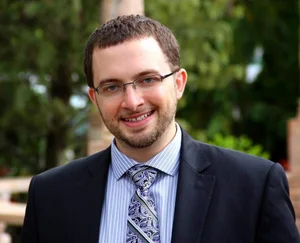
EP 103: Designing Planetary Health | Chethan Sarabu
Did you know that the U.S. healthcare system is responsible for 10% of national greenhouse gas emissions? Learn how a pediatrician trained in landscape architecture is using clinical informatics and design to address the health impacts of climate change.
Chethan Sarabu, MD trained in landscape architecture, pediatrics, and clinical informatics builds anastomoses across these fields to design healthier environments and systems. He is a Clinical Assistant Professor of Pediatrics at Stanford Medicine, Director of Clinical Informatics at Sharecare. Across these roles, he works on designing and implementing a wide array of innovations ranging from patient portals, EHR transformation, virtual clinical trials, and A.I. driven digital biomarkers, to health information policy initiatives all through a lens of health equity and patient privacy. Drawing on his background in landscape architecture, Chethan implements and researches nature based health solutions such as the health benefits of urban green and blue spaces and Park prescriptions with the Stanford OurVoice and Natural Capital teams. Finally, he is shaping the emergent field of climate health informatics, which brings together emergency preparedness, sustainability, and environmental health, with a technology framework for climate health adaptation and mitigation.
Episode mentions and links:
Chethan’s restaurant suggestion: https://omsabor.com/
Follow Chethan: Twitter | LinkedIn
Episode Reflection
When I had the chance to meet Chethan with Bon recently in NY at Design Optimism hosted by Metropolis, I was blown away by the statistics he revealed to us about how much of an impact the US Healthcare Sector has on emissions. In retrospect, it’s pretty obvious having spent years working in hospitals and seeing incredible amounts of single-use plastics and devices being discarded every day. In the pharmacy world, plastic blister packs are practically mandated due to the requirement that every pill is individually labeled. Imagine how much waste medication use alone creates across the country. Also, with our centralized care model in the US, the emissions associated with travel to and from receiving healthcare is a massive contributor. In my search for more info, I found a fantastic primer article from The Journalist’s Resource written by Kerry Dooley Young which does a great job putting a lot of the info that Chethan spoke about in one place. Having listened to this week's episode I find myself enlightened to a new issue that I can’t stop thinking about. How much is our industry, which exists to heal people, contributing to worsening the unfolding climate crisis? Are healthcare organizations, most of which are already overburdened and underresourced, able to respond to calls to reduce their climate footprint? What could we learn and how would we act if there was more data and transparency? What would it take to encourage the entire healthcare system, from manufacturing to direct patient care, to prioritize this issue? Despite all the questions, one thing I’m sure about is that more and more of our patients and staff will begin to demand that the organizations they support are just as concerned about contributing to climate change as they are. Thanks for reading and tuning in this week!
Written by Rob Pugliese
-
Bon Ku: Did you know that the us healthcare system is responsible for 10% of national greenhouse gas emissions? In today's episode you can learn about how a pediatrician who studied landscape architecture in college is using clinical informatics and design to address the health impacts of climate change I'm Bon Ku, the host of Design Lab, It's a podcast where we explore the question how might we design healthier lives? Today's guest is Chethan Sarabu he is a pediatrician trained in landscape architecture pediatrics and clinical informatics he builds anastomoses across these fields to design healthier environments and systems. Chethan is a clinical assistant professor of pediatrics at Stanford Medicine And he is the Director of Clinical Informatics at Sharecare. He works on designing and implementing a wide array of innovations ranging from patient portals EHR transformation virtual clinical trials and artificial intelligence driven digital biomarkers to health information policy initiatives all through the lens of health equity and patient privacy.
He draws upon this background in landscape architecture to implement and research nature based health solutions such as the health benefits of urban green and blue spaces and park prescriptions. He is shaping the emergent feel of climate health informatics, which bring together emergency preparedness sustainability, and environmental health with a technology framework for climate health adaptation and mitigation.
You can find our new website at designlabpod.com. There you can register for our amazing newsletter which drops each week And you'd be able to see an archive of all of our podcasts we have over a hundred! Go to apple podcasts give us five stars leave us a review tell someone about the podcast share about the podcast on a social media we really thank you for your support. Now my conversation with Chethan. Chethan, welcome to Design Lab. We're good friends. We've known each other for a while, and I had a chance to meet you in New York City recently, and I loved hearing about your work, so thanks for coming on the show.
Chethan Sarabu: Thank you so much, Bon, it was great to see you in New York as well, and so glad we connected and excited to be here today.
Bon Ku: Yeah. You have a really diverse career path. You were trained as a pediatrician, but you had stumbled into a class when you were a student at Cornell and you ended up studying landscape architecture. Is that right?
Chethan Sarabu: That's correct. Yeah, it was very serendipitous. I was at Cornell as a pre-med biology major, but I always had an interest in design, and. Looking at the bigger picture, but I didn't really know what that would be like. And one day in, I was wandering around one of the biology buildings and discovered this amazing space, the landscape architecture studio.
There were plants, there were people building cardboard models, there were people drawing, and it was just a space full of creativity and nature.
Bon Ku: It probably looked a little bit different from organic chemistry class
Chethan Sarabu: Totally, totally And, I was just, you know, I knew nothing about it. And I decided to just go talk to the, department chair. You know, I told him I was a pre-med student. I had an interest in designing airports. Do you think there's a role for me here? And you looked at me with a puzzled look and said, you know, why don't you take one of the intro classes?
I took a intro design studio class where I learned to draw urban plazas and spaces. We learned to draw trees and really learned a lot of the fundamental principles of, of designing space. Similar to, you know, for, I think a lot of people are familiar with architecture where you're talking about the design of buildings, landscape architecture is really the design of outdoor space.
At all different scales. So it could be, you know, your backyard all the way to a large park like Central Park in New York City to even larger spaces like planning whole new cities. So it's really about that design of outdoor spaces. And that, yeah, completely was transformed the way I started to think about design and also about health.
Bon Ku: I don't actually know of another physician who studied landscape architecture, went in formally in college. Like was that challenging to do all that studio and do all your pre-med classes at the same time?
Chethan Sarabu: Yes and no. In some ways, it did, you know, take a lot of time and I, did have to spend a fifth year of undergrad to be able to fit all the courses in, but in some ways, both disciplines complimented each other really well because,
Bon Ku: Hmm
Chethan Sarabu: My pre-med classes were a lot of classes were memorizing a lot of facts, opening up that biology textbook.
Everyone loves to mention the kreb cycle. And, and really just you, you're memorizing a lot of detail, and kind of regurgitating it, not super creative, but you're packing in a lot of content. And then on the design classes, you have to be really creative. It's taxing of the brain in a very different way.
You're, you know, you're given, a big plot of land, like a plaza on campus, and you have a few months to come up with a new design and there's, it's the whole design thinking creative process. and that has its own challenges where you, you know, you might start off by doing some empathetic listening and trying to understand what the needs of the space are, but at some point you have to sit down and be like, this is what I want this space to look like.
It's a different perspective. And what I found for me, because I was doing both, I would actually. If I ever felt challenged or sort of had that writer's block or design block, I would then go to my biology textbook and try to memorize some facts because it used a different part of my brain.
And interestingly, I actually brought in a lot of principles of biology and natural organisms and kind of this. Biophilia perspective into thinking about the design of space and, you know, I could share some renderings or drawings. I had a diagram of a city with all of the organs laid out all over,
Bon Ku: Whoa,
so.
Chethan Sarabu: part of the city was like the stomach and this, this road over here was the spine.
And so for me it was really this, being able to, to go back and forth and look across disciplines was what was powerful.
Bon Ku: You remind me of an athlete who cross trains and you're using different muscles and you're using like different parts of your brain jumping from like design studio to the science classes, and I'm curious to know. What did landscape architecture teach you, or how did that impact your ability to think differently as a physician?
You alluded to this before.
Chethan Sarabu: Yeah, it completely transformed everything I knew about health. And really to this day, even though I'm not a practicing landscape architect, really carries through a lot of my work. Landscape architecture taught me to look at health at a much larger scale. A lot of the projects we worked on were looking at, you know, the scale of a city.
We were looking at how do you design environments to promote health? How do you design environments that get people to walk? And not just looking at the sidewalks and that, but also looking at nature. How do you bring treason, what's attractive to people? so it was really expanding that perspective and, and looking more broadly at the factors that drive health and realizing that there are people who make decisions about the environments we live in. And so that, was one piece that gave me, a new reference for health and, and then even broader than just kind of man-made environments is the, the natural environment. Because landscape architecture is really about, designing with nature.
and I think this is one of the key differences between landscape architecture and architecture and, and how it might relate to medicine In architecture, you come up with a vision for a building that has very exact specifications of exactly where all the doors and windows are gonna go, and you have that final product.
With landscape architecture, you do also have a lot of precise specifications. But then a lot of what you design is actually left to the uncertainty of nature because you say, you want to design a park and you want certain trees and plants to be there, but they may take 20, 50 years to grow, to be part of your, your vision.
And so, It really teaches you about how to design for an uncertain future. You have to be okay with that, where you have some level of kind of specificity and, and human imprint, but then you have to be okay with. Letting you know your design kind of be controlled by the natural elements. And I think that has some parallels when we think about connecting it back to the healthcare system when we think about systems design, and how we might like something to be.
I think there's this notion of, we try to come up with these, you know, perfectly crafted ideas where we create all these nice diagrams and come up with like a great vision of how something's gonna be. But then the reality is it doesn't unfold that way. And I think that's, that's another, piece that I, I learned from landscape architecture.
Bon Ku: like designing a clinical pathway, but then when in real life it's like, oof, there's like. This does not work in real life or it takes on a whole different scale. And I heard you say that landscape architecture helped you think at different scales at a, as a physician.
Can you, explain that?
Chethan Sarabu: Yeah, yeah. This, this idea of multi-scaler, kind of systems design thinking is, is really, really powerful or at least how, how I learn about it. So I'll talk about the landscape architecture piece and thinking, and then. Talk about how it relates to healthcare. So take a large park like Central Park.
I think it's one of the most famous parks that people are familiar with in New York City. And so when a landscape architect thinks about designing a park like that, you are designing across scale. You're thinking at the scale of the whole city how cars and people might flow through there. Then you go to that medium size scale of like, okay, there's gonna be a pond over here.
There's gonna be trees over here, there's gonna be baseball fields over here. And then you get to the really small scale where you're like, okay, there's gonna be a bench here right next to this path. And so you have to think about design across these scales. But then they also need to all integrate together.
Bon Ku: Mm.
Chethan Sarabu: And when you think about that with a, with a healthcare system, you know, you might be looking at, for example, I know you're, ER physician and I'm a primary care pediatrician. And in our day-to-day clinical flows, we run into a lot of systems issues, but that bear out in kind of individual, you know, actions.
And so oftentimes when you're thinking about how do you try to solve a particular problem that maybe you're noticing in your own clinical workflow or your neck of the hospital or clinic, but then really you, you realize that this is part of a, a broader issue that's probably happening to other parts of the hospital, or it may be at that really large scale of, hey, there's like larger forces from like regulatory and economic forces.
Leading to these, these smaller issues. So I think for me, that's where that type of design at different skills helped me understand systems design and healthcare at different skills.
Bon Ku: yeah, yeah. and I think I was reading somewhere or listening that, maybes a problem like obesity and you know, you're seeing a patient at the bedside, but obesity, you know, you could, you have a treatment plan for that one particular patient, but obesity is often multifactorial in its cause. And it's these systems at play that you're talking about, you know, whether it's a lack of, a lack of access to, healthy fruits and vegetables or a lack of trans mass transit and you end up going in a car and not exercising and the, the policies around soda, for example, that it's a whole, there's all these different scales and it's just not that one individual behavior that leads to obesity when you see that one patient.
Chethan Sarabu: Exactly. Exactly. And, and then I think it's, you know, then as physicians or you know, work or healthcare professionals, A lot of our training traditionally has been in what can you do in this immediate setting, to address this problem. And we haven't necessarily had a lot of training and being able to look at systemic issues.
And, and that's changed I think over the past decade where there's been a. More of a focus on social determinants of health, environmental determinants of health. But there still is a bit of a translational gap in where, you know, you as a physician might identify, okay, maybe you learn that your, patient who you're trying to help, maybe get more physical activity or spend time, more time in nature.
You learn that they live next to a highway and it's not safe to walk outside. and for, for a lot of us in the healthcare system, then it's sort of like that's the, it feels like that's really the most we could do. We, we learn about the barriers, but then I think there's this opportunity to help actually connect to the people who can make those changes.
People in public health agencies and the parks department really at that, kind of broader level. And a lot of that I've learned through my training as a landscape architect there are people who are looking at this larger scale of the city and trying to figure out how do we help create neighborhoods where children can get outside and play in nature, but then they're often not connected to that individual scale that physicians and other healthcare professionals can get where we're seeing these problems one-on-one.
And so some of the work I do is trying to help bridge that divide from both sides.
Bon Ku: You're working on a cool initiative with a great name called Chill. What is Chill?
Chethan Sarabu: Yeah. Yeah. So CHILL stands for the Climate Health Informatics Lab. It's the bringing together of, climate change health informatics altogether in this creative environment. And I think just in getting to chill. I think the other piece I wanted , to just bring in is, with this work that I've done as a landscape architect and kind of looking at systems issues of how do we.
Connect people from the healthcare system to the broader, you know, public health system at large. And thinking about these environmental factors, I realized that there's a huge technology component to all of this. And so part of my training brought me into the world of informatics. And so it's really chill in a way is the culmination of a lot of different threads of my, training in life.
In really looking at environmental health and informatics. you know, and I could talk a little bit more, about that path, but I want to get, just get into, into talking about climate health informatics. So when we, when we think about climate change, it's this really big, complex problem.
It can be frustrating, it can be overwhelming. You don't know where to start. There's this tension where you feel like, okay, you know, how much can I do as an individual? Isn't it really just all the fossil fuel companies? and it feels like hard to really grasp.
Bon Ku: Yeah. It's like, Hey, I recycle, I compost. Maybe I'll buy electric car if I had money one day, but what more can I do for the planet? it's like generations from now that we're talking about, like that's, I think that's a mindset of, of a lot of us.
Chethan Sarabu: Yeah, yeah, definitely. And I think for me, one thing being a pediatrician, you know, so I'm in, I'm in my thirties and you know, I had a childhood where I wasn't really thinking a lot about climate change, but that's not the same for a lot of younger people. Many patients I take care of, where climate change is a lot more immediate and an existential threat to their future. So if you talk to most young people, really kind of under 25, and you ask 'em what are the top three things they care most about some, oftentimes all three of those are climate change. That's an important piece to understand.
It's because we're, starting to see the world that we live in. You know, we have created this society, this industrial society that has a certain way of life. Obviously it's not equitably distributed across countries, even within the United States, there's a lot of issues of equity.
Chethan Sarabu: But now our way of living is going to have to change to really be in balance with the earth, the lifestyle that we've created is not in sync with Earth's capacity to handle it. And so if you're a young person now thinking that you know, you'll be alive for a couple of decades, the world may start to look really different.
And we already know from the research that comes from the IPCC. The COP conference that just happened, basically these, gatherings of international agencies, they say that if the earth warms by more than 1.5 degrees Celsius by 2050, It's going to lead to a lot of catastrophic changes where one to 2 billion people may not have food or water or shelter.
And over the past few years, we've experienced, you know, the crisis of covid. We've seen a lot of refugees crises. We're seeing a lot of natural disasters that seem to be an increasing frequency and all of the best science shows us that this is just gonna keep getting worse and worse and worse.
Bon Ku: They're really seeing and experiencing and potentially will face more of the consequences of how climate change impacts human health.
Chethan Sarabu: Exactly. Yep. Yeah, and that connection of climate change to human health is one that is increasingly being recognized, not just by those of us working in healthcare. I think that's an important component of it, but really everyone who is trying to urge more action, I think a lot of times when we think about climate change. People think about transportation or recycling or energies, but really health is at the center of climate change and there are a lot of linkages. And it's also a way to get people to, understand, on a much more personal level, why climate change, why we should all care more about climate change.
Bon Ku: Can you talk about some of the linkages, cuz I think most people listening don't see that direct correlation with climate change and human health
Chethan Sarabu: Yeah, definitely. Definitely. So there's, you know, two broad ways to look at it. There is when we think about climate change and people. Things get broken down into adaptation and mitigation. So adaptation is really how is our world changing due to climate and what are we gonna do to prepare for it?
Mitigation is how do we decrease our, our impact? For both adaptation and mitigation. There are connections to the healthcare system, but really on the adaptation side. With a change in climate, we have increased heat waves that leads to increased mortality and morbidity for the elderly and the very young.
We have changes in weather patterns that are leading to increased wildfires. Those wildfires lead to poor air quality. If you're living in places with air, poor air quality, and you have a respiratory illness like asthma, you're going to face exacerbations. But there's also a lot of things that are not as obvious.
There's a lot of research now, including now some systematic reviews and meta that are reviewed. You know, dozens to if not hundreds of studies, which actually show a strong link between exposure to poor air quality and premature and low weight birth. So, yeah, which is not an obvious connection right away, but we're seeing.
Yeah, women, especially like in the West Coast where there's been a lot of wildfires, there is a lot of, evidence to suggest that that exposure to wildfire smoke is actually leading to preterm birds. And so there's some connections that may be obvious with increased heat. You understand people may get heat sharp, but there's a lot of things that are not as obvious.
and there's, you know, a change in climate where it's seeing changes in different disease patterns and, things like Lyme disease might be in, in more places than, than previously expected. And so there are a lot of these linkages, and the, the best place to learn more about it, is the Lancet Climate Countdown.
The Lancet, which is one of the top medical journals for the past five years now, five or six years now, has a report, an annual report they do in all of the linkages between climate change and human health. And then the last piece I'll mention there's many linkages here, but one that I think doesn't get mentioned enough is the links to, between climate change and mental health, especially for younger people, because of the existential threat that climate change poses.
There are a lot of mental health concerns, anxiety and depression, uncertainty about the future. so there are some great organizations that have started recently that specifically focus on the mental health aspects of climate change.
Bon Ku: Lot of powerful evidence. Listening to your talk though makes me a little bit depressed, Chethan, I like you to be honest. Like Can we do? Like what can I do as a physician? This problem is so like big . I mean it's like literally, literally the planet.
Chethan Sarabu: Yeah, it's definitely, can be depressing and, can, be tough to hear and one response is to kind of ignore it and pushes to the side. And for me, I think this is where, my training as a designer and an informatician come into play. I think design is a way to help us imagine a better future.
It helps us deal with ambiguity and uncertainty, so when things feel frustrating, feel so large that you can't do something about it. Use the framework of design to break it down into manageable pieces, into that way of, imagining a better future and not just letting into despair. and then informatics also offers really great tools to be able to address very complex and large problems informatics. There are many different definitions, but really it comes down to the intersection of people, process and technology. It's about how do we use technology? In the real world, how do we think about technology as part of a living, breathing system with people who use it rather than just kind of the cold software?
And the field of clinical informatics is really about how technology gets used in healthcare settings and what informatics offers, I think to climate change. The links between climate change and health are that it can help to quantify. Help to measure nudge, behavior change. So those are some of the ways in which informatics I think plays a role.
So I think climate change is this huge, complex problem that affects all of us. It's easy to despair and just brush it aside, but I think. the scale, the urgency of it really demands all of our attention. And I think there are many ways to bring all sorts of training. Even if you're not a designer, an informatician whatever skillset you have probably has some value to the play in addressing climate change.
Bon Ku: I mean, this is the design challenge of humanity.
Chethan Sarabu: Yes.
Bon Ku: climate change. What, is your new organization Chill doing about this?
Chethan Sarabu: Yeah. So, Chill is, this organization that's just getting off the ground and it's really about bringing together people within healthcare and informatics and really anyone , who is interested as well. We wanna make this an inclusive process, but what we see right now is that, with the all of the health risks that I mentioned that can happen as a result of climate change, as well as healthcare systems trying to address their impact on climate change.
There is a technology data informatics component to it, and so what we're trying to do is to come up with a framework to help put these pieces in place so that different projects can be. Accelerated. So on the one hand I talked about climate change adaptation. So if there are wildfires and people with asthma might have exacerbations because of the poor air quality. We can use data. We have good weather data and we have tools like artificial intelligence, which can predict what might happen. We can actually connect the dots between poor air quality to identifying people who might be prone to an asthma exacerbation or C O P D exacerbation or any other respiratory illness exacerbation within that area and use the tools of informatics of digital health to be more proactive and make sure those people have their inhalers, that they, you know, are maybe using their inhaler, baseline controller inhaler to prevent their symptoms, more proactively. And so that's one way in which the technology and data component can be used to better help people living in disaster prone areas.
Bon Ku: It's kinda of like what happens when the weather reports sometimes gives like the pollen count, and if you have like bad allergies, you know, oh, it's a high pollen count, so you could prepare.
Chethan Sarabu: Exactly. Exactly. Yeah. It's, bringing together and it's really kind of this work in environmental health that has been going on for some time. But I think with climate change, it's the scale and urgency, that's driving more of this work forward. So there's that part of it in terms of how we can use.
Informatics data to help people better adapt to climate change. It's for individuals, it's also for health systems. For example, a a few years ago in the Pacific Northwest, there was a major heat wave that led to a lot of older individuals having heat stroke and coming into the emergency department.
And part of this is because in the Pacific Northwest are not a lot of air conditioners. And what was happening unfortunately, was a lot of people were coming into the emergency department who basically needed, IV fluids, basic hydration and cooling. But because of that large influx, it was preventing people who were having heart attacks and other conditions from, in.
And so part of what's starting to happen is, How do health systems at a regional level, along with their public health agencies look at the data of what's happening? If we predict a heat wave is coming to a particular region, how can the health systems work together with the city to optimize where people go so that not everyone is coming into the emergency department all at once?
And the city might set up cooling centers or. Tens that can provide hydration. So there's a data component to that. And many cities have actually now started to bring in maybe not many starting cities like Miami have actually just appointed their first chief heat officer, to look at how a city addresses heat.
So that's, you know, that's an example. How data, climate health intersect. so there's that whole component of it. And really what Chill what we're trying to do is say there are many different challenges going on, many different opportunities we're trying to bring. all the bright minds together in informatics, with a design in interesting kind of design and addressing complex problems, to figure out how we work together better and faster.
yeah, and, and in addition to the adaptation piece, there's also the mitigation side, and this is. How health systems can address their impact on climate because the US healthcare system accounts for 10% of our country's greenhouse gas emissions.
Bon Ku: Wait, what That. Like ho, like hospitals are responsible for 10% of greenhouse gas.
Chethan Sarabu: Yes.
Bon Ku: Wait, how, how much are, are cars responsible for greenhouse gas in the
Chethan Sarabu: So transportation as a sector, and, I forget the exact number, but transportation as a sector is about, I think 25 to 28%. And that's not just individual cars. I think that's planes, that's commercial trucks. So you know, so healthcare is not that high, but to put it in context, healthcare system in the United States generates more greenhouse gases than the entire United Kingdom.
Bon Ku: Oh my gosh.
Chethan Sarabu: because of the scale of our, country. and a big part of it is the amount of single use plastics and material we have.
Bon Ku: Everything is single use
Chethan Sarabu: yes.
Bon Ku: it feels so bad after working a shift and especially if there's like a code or you know, one, it's just, it's hard, you know, taking care of a patient who's you're resuscitating, but then you look after aftermath, there is so much waste. Like literally there's so much waste that I actually can't see the floor of a patient room.
It's could littered with single use plastic.
Chethan Sarabu: Yeah, it's kind of astonishing the, the scale of, of waste we have, and that really is responsible for about 85% of the greenhouse gas emissions. It's all that kind of embedded energy and creating that material, transporting it over. So it's not really about, you know, 15% is really the energy use of the building.
You know that power sources, but it's really all the other stuff. And so there are some people who have been working on this and doing some really interesting research. One of them, Dr. Cassandra Thiel at NYU has been looking at how we do cataract surgery in the US and the UK and in India.
And. She found that she spent some time in India at the Arvin Eye Hospital, which is one of the top hospitals for eye.
Bon Ku: In the world.
Chethan Sarabu: In the world. And so she spent some time there looking at how they do cataract surgery and the material they use and compared it to what was going on in the NHS in the UK, which is, in the UK system's more efficient than the US' system in terms of material use, and found that, for the same exact outcomes, for the same cataract surgery, the same outcomes in terms of the quality of the procedure, the success rate, the lack of infection.
They were able to do the same surgery in India with only 5% of the emissions as they were in the UK,
Bon Ku: But I don't understand. Are the surgical instruments not being wrapped in plastic? Like how, how do they do that? Because we love our packaging in the US I mean, I hate, like I eat takeout all the time. I hate gaining takeout cuz I look, there's so much plastic generated. We like, we love our plastic.
So I think listeners might be going well, what about infection risk?
Chethan Sarabu: Exactly. Yeah. And so in the work they're doing, you know, they were looking at how do you make sure that you have the same outcomes, that there isn't. That infection risk. And I don't know all the specifics of exactly the techniques they use. they do have sterilization techniques, but ways that are maybe less energy intensive, don't use so much single-use plastic, but might have other sterilization mechanisms.
But ultimately there's yeah, able to find the same, have the same health outcome. With less use. And so there's a lot of work going on right now in trying to create clinically sustainable care pathways. And there's a lot of learning that the western world can do from more developing countries, low and middle income countries that have had, you know, functioning healthcare systems that do a lot of surgeries often with less resources.
But might have great outcomes still. And so there's, there's a lot of work in kind of understanding all of that. And then the informatics component is really quantifying, measuring, bringing this into the electronic health record in some ways and giving you a greener option, for example. when you use something like Google Maps or Apple Maps it might tell you if you take Route two, you know, option B instead of option A.
Chethan Sarabu: So there's work going on now, and this is a, a grant that I have along with some folks at Stanford we're looking at different clinical pathway choices where you can, you know, make a different clinical decision, still have the same outcomes, but maybe have less of a greenhouse gas impact.
Starting to, look into that and bring that into the EHR and get frontline healthcare workers thinking about this in day-to-day operations.
Bon Ku: What are hospitals doing about this? So you gave an example that you're doing are hospitals at, on a whole, doing something about the environmental impact they're having.
Chethan Sarabu: Yeah, I'm glad you asked, cuz there is a lot going on kind of at the national level for hospitals and some of this is being really championed through the the federal government. So, through the federal government, the Department of Health and Human Services, HHS, has launched a new Office of Climate Change and Health Equity.
And so it's a relatively new office, which I think just started maybe less than two years ago. It currently doesn't have, regulatory teeth to force anything. But this office has been working with healthcare systems across the country, as well as other organizations like the National Academy of Medicine to help hospitals come up with climate goals.
And about 40 hospitals around the country. Have signed the climate pledge that has come out of HHS, from the federal government to set carbon goals. And these are in line with the Paris Agreement, to help us achieve that making sure that the global temperature doesn't rise beyond 1.5 degree Celsius.
So these are pledges like, the hospitals will reduce their emissions by 50% by 2030, and they hope to get to net zero by 2050.
Bon Ku: Are hospitals hiring people with expertise in this? I can't think of like a climate person at my hospital system.
Chethan Sarabu: it's starting to become a new role. They're starting to be chief sustainability officers coming into, into hospitals. Um,yeah, it's a, emerging, new role of tech, companies and Corporate America has been doing this for maybe three to five years. But it's, it's a new thing for hospitals in the healthcare system.
But, that is starting to happen.
Bon Ku: Oh, I, I love that. Well, hospitals are usually about 10 years late to the game, so maybe we'll see some of these rules being filled
Chethan Sarabu: Yeah.
Bon Ku: soon. I hope. I hope much sooner than that.
Chethan Sarabu: yes.
Bon Ku: We're running outta time here and I want to give you, I know you have a busy schedule. If one of our, listeners were to come visit you, where would you take them out to eat?
Chethan Sarabu: Yeah, so I live in San Francisco and I would take to this new restaurant actually I just discovered recently called Om Sabor and it's really interesting cause it's actually a fusion of Indian and Mexican flavors.
Chethan Sarabu: and it's. all vegan, but very flavorful and tasty. And then the whole restaurant is actually inside a bar that plays great electronic music.
And so it's, it's a very amazing, you know, fusion experience of Indian, Mexican vegan flavors, all with a great dj. Yeah, it's a really cool spot right in the heart of San F.
Bon Ku: Dude, let's go there. Next time I see you, can you take me out there
Chethan Sarabu: definitely would love to Bon.
Bon Ku: Well, I, appreciate your time. I, I love the work that you're doing. You are a renegade and expert in climate change and how that impacts human health and love the advocacy work that, that you're doing. Really appreciate you coming on the show.
Thank you so much for having me on the show and was really excited to talk about design informatics, climate change, and I hope to continue this work and continue to work with others who are interested. I hope this conversation didn't depress you but instead inspired you to you think about how we can address the health impacts of climate change you can follow Chethan at c h e t h a n r
And reach out to me on Twitter at B O N K U and on Instagram at D R B O N K U Design Lab is produced by Rob Pugliese, editing by Fernando Queiroz. Theme music was created by Emanuel Houston and the cover design by Eden Lew. See you next week.