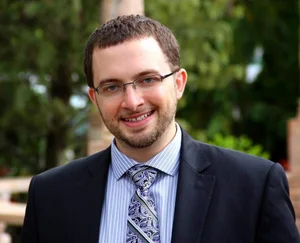
EP 104: Designing the Future Healthcare Workforce | Norma Padrón
Did you know that the healthcare industry is the largest employer in the U.S.? Learn how an economist turned healthcare entrepreneur is redesigning how we train the workforce of tomorrow.
Dr. Norma Padrón is a Latina and first-gen economist with a doctorate in health economics who founded EmpiricaLab—a company specializing in peer–to–peer training within healthcare organizations to accelerate their digital transformation.
She earned a Ph.D. in health policy and management from Yale University; a master's degree in economics from Duke University, as well as another master's degree— in public health-from Universitat Pompeu Fabra in Barcelona, Spain; She has a bachelor's degree in economics with a math minor, from the University of Texas, Rio Grande Valley.
She has held leadership roles across the healthcare industry, including in academia, nonprofit and private sector. Her teams have leveraged data analytics and technology to improve digital health products for patients and providers, design value-based care models, and quality and performance measurement and training.
In addition to her work in health economics and analytics, Norma has held board positions in STEM education and technology, including as Chair of the industry advisory board for an NSF Industry-University Cooperative Research Center focused on improving healthcare through organizational transformation.
Her company, EmpiricaLab, is in Beta and has received funding from programs like the AWS Impact Accelerator for Women Founders and the Techstars Workforce Development Program.
Episode Links and Mentions:
US Census Bureau: Who Are Our Health Care Workers?
Norma’s fav restaurants:
Bar Ciccio Alimentari - NYC
Follow Norma: Twitter
Episode Reflection
I really enjoyed Norma’s episode this week because the heart of what she is trying to do at EmpiricaLab is to address a problem that is core to one of the biggest challenges we face in healthcare. How do we empower people to provide the best care by using the best technology? Norma’s message that there must be a person in between the technology and the patient is an important one. Yes, we all want the best possible technology to be used when our lives are at stake, but there is so much that technology simply cannot do without a human in the middle. Who will deploy, evaluate, optimize, and educate about new technologies? How much can we really expect from our allied health professionals who find themselves not just having to be experts at providing care but also masters of technology adoption at unprecedented rates? I was one of the first to get the latest generation insulin pump that was released by my pump maker last year. I was so persistent with the company that I got access to the tech before my diabetes educator, or anyone at my clinic could get trained on it. My providers couldn’t help me get it up and running because the company chose to release the technology versus waiting until the entire workforce was trained. I was happy about that decision because I had the capability to figure it out on my own. But, what does this mean for people who can’t or shouldn’t try to adopt potentially life-altering technology without support? What inequities will be created simply due to technology outpacing the ability of humans to adopt it effectively? And are we just supposed to keep piling new responsibilities on our already overburdened providers? It’s a fascinating topic and one where innovation and creativity are desperately needed. I am happy that people like Dr. Padrón are working on it.
Written by Rob Pugliese
-
Bon Ku: Happy New Year. Welcome to the first episode of 2023, I’m Bon Ku the host of Design Lab, a podcast where we explore the question, how might we design healthier lives?
On today's show, we hear from an economist, turn healthcare entrepreneur, talk about how she is designing the healthcare workforce of the future.
The healthcare industry is the largest employer in the United States. Over 20 million people. But each month over 500,000 are quitting the healthcare workforce.
Today's guest is our very good friend, Dr. Norma Padrón. She is a Latina and first-generation economist. She founded Empirical lab, a company specializing in peer-to-peer training within healthcare organizations to accelerate their digital transformation.
Norma earned her PhD in health policy and management from Yale University.
Norma has held leadership roles across the healthcare industry, including academia non-profit and private sector roles. Her teams have leveraged data analytics and technology to improve digital products for both patients and providers, design value based care models and quality and performance measurement and training. Norma's company, Empirical Lab has received funding from programs like the AWS impact accelerator for women founders and the Techstars workforce development program.
If you haven't already visit designlabpod.com, where you can find show notes from each week, learn about our guests and get links to related content from each episode.
There, you can subscribe to our VIP listener club and get links right into your email inbox. Whenever a new episode drops, we usually drop episodes every thursday morning and our producer, Rob Pugliese will promise not to send you a ton of emails. Instead, he will send you a fun surprise now and then for being part of our loyal audience.
Support the Design Lab Podcast, by going to Apple Podcasts and Spotify giving us five stars, leaving us a review and telling someone about the podcast. Now here's my conversation with Dr. Norma Padrón. Norma Padrón welcome to Design Lab. I'm so excited to have you here.
Norma Padron: I'm so excited to be here. Bon thank you for the invite
Bon Ku: Well, we, we are good friends and learned so much from you as a health economist, and you have transitioned into your own startup company, which is very cool. So can you tell us about your startup company and what you're trying to accomplish?
Norma Padron: Yeah. Thank you. So Empirical Lab is a cloud-based platform that helps teams in healthcare organizations collaborate, share insights, conduct peer-to-peer training. And so the way to think about it is, you know, you have project management platforms, and then you have some learning management systems, many of which people don't necessarily like or are happy with.
and we're bridging both of them. And so we're using the opportunity that as teams deploy their own products, projects, particularly in digital health and healthcare technology, they can use that opportunity to, collaborate and conduct peer-to-peer training. As you know, a lot of the projects in healthcare technology, they require clinical teams, business teams, data analytics, and technology teams, sometimes even vendors.
And so we're the platform that brings all of that together, and helps them organize, catalog and index that information so that they can, they can accelerate their digital transformation.
Bon Ku: I love it. What was the inspiration for doing this? Because you are a health economist and you've worked in academia, you've worked in the private sector and had held. A lot of great positions and it's a big leap, to do this. So I'm just curious to know what was that thought process?
Norma Padron: You know, It feels that for me at least, that I've been working sort of on the same topic for almost a decade. I think the connecting thread is how can we make healthcare more accessible? How can we make healthcare less confusing? And then, how can we just make it better? And so, from an academic standpoint, I started, working as you know, in New York and conducting research on how to redesign services.
And the goal of that work was, you know, thinking about populations that are really hard to reach, complex, populations that have multiple chronic conditions. And then thinking how do we organize the services to deliver better care for them? and then when I left academia, I worked a lot with the teams behind the scenes, the data analytics teams, the population health teams that are basically working with a lot of the data and technology to deliver their services.
Before launching the company, I was working at a large company here in the US that, allowed me to work with digital health companies, early stage digital health companies. And our goal there was to help them find scale to get those digital technologies faster, to our, to our members.
And so, so EmpiricaLab I feel is sort of like a continuation of the work that I've been doing, which is alright, I've Been convinced, I've seen it through and through that, data and technology really is, ripe for scale, that we can do a lot of good work for patients and caregivers. But, I think that what has been forgotten or the big insight for me has been that we've forgotten that human in the loop is necessary. It's a necessary condition.
Bon Ku: We still need humans? We can't just use machines?
Norma Padron: No , no. We actually need humans behind the scenes really monitoring and observing and evaluating, and putting that human touch to digital health technologies. And so, EmpiricaLab focuses on that. It's, it's, I feel it's a continuation of my work. Like for me, it feels like I've been working on the same things just from different angles, but it's really focused on those teams.
And you know them, they're the ones that, we go to their offices and beg them for that data query. You know, we ask them to please help us on this and that. And I feel like those teams, those data analytics, digital innovation, teams within healthcare. There under a lot of pressure, you know, and we wanna be a tool, for them. So that's the genesis of the idea.
Bon Ku: and I've heard you talk about how healthcare is not prepared for this digital transformation and how is your company doing, filling in that gap and what are some stats on there on the lack of healthcare workforce for this digital transformation?
Norma Padron: Yeah, so I mean the healthcare workforce, again, when we think of it, we think a lot of the clinical workforce like, like yourself, rightly so. we should care a lot about of doctors or nurses and, and certainly we do. I think that what doesn. gotten a lot of attention yet, is that, you know, healthcare as a sector is the largest employer in the US.
Bon Ku: The larger.
Norma Padron: the largest, the absolute largest, 20 million people are employed in the healthcare sector, which represents over a trillion dollars, in annual payrolls, annual
So,
Bon Ku: So we beat out, we beat out like Amazon and Walmart, right?
Norma Padron: Absolutely, absolutely. Retail, manufacturing, all of those sectors are not, in terms of workforce as big
Bon Ku: I feel like people don't know this though. Like, why is that?
Norma Padron: Well, I mean, there's many reasons, right? But I think if we also consider that, as an item within our GDP, the healthcare sector is, one of the largest.
And so yeah, the, humans behind it are also, you know, some of the largest.
Bon Ku: So more than just like doctors and nurses, right?
Norma Padron: Correct. Correct. I'm including the whole workforce. Exactly. So doctors and nurses are a fraction of that, including allied, professionals in healthcare, public health professionals, technology, of course. And everyone in between. Of that workforce, 77% are women. so
Bon Ku: I did not know that. Huh?
Norma Padron: I will definitely send you the stats for your listeners.
Yeah, so 16.4 million out of the total 21.2 million workers are women.
Bon Ku: Why is that? That is a hu. That is a, that's huge.
Norma Padron: It is huge. It is huge. and so as a sector, as a place of work, when we think of, this concept of the future of work, which is how technology has transformed work, workplace, and workforce. Well, it comes to mind that no largest sector exist to be transformed as is healthcare.
And so, and, and, and, you know, and technology has entered in ways that I think haven't been as empathetic. I've had the good fortune of working closely with colleagues like yourself and you know, the, the environment when it comes to technology, oftentimes that part of the workforce feels that they haven't participated, they've been given technologies.
They haven't deliberately been asked what those technologies mean to them. So I think that that's a lot of our impetus. I mean, I have a background in economics. I care a lot about human capital, when it comes to health, and education. I feel like I'm working at the intersection of,
Bon Ku: I've joked with you many times before that you're the economist that has a heart about healthcare and actually cares.
Norma Padron: I appreciate that. I've been humbled. I think I you, some years ago, I was very cocky. I think when I started I was very cocky. I think that economics gives you this
Bon Ku: well, you're an economist. Yeah.
Norma Padron: Yeah. and then working with clinical colleagues and seeing them, in the trenches. it's been an honor. I think I, I've had my office inside hospitals and so I think that that's been genuinely an honor, but also a very humbling and eye-opening experience. Yeah.
Bon Ku: Well, part of your training as economists is to predict the future, isn't it? You do all this economic forecasting and, and so you've been trained to do that. So I'm, curious to know, looking into Norma's crystal ball on the future of healthcare, what sort of trends do you see coming in the upcoming years?
Norma Padron: Yeah. I love that question because I think like the most economist answer that I could give you is like it depends, but I'm not gonna answer. We're experiencing the cycle, when it comes to technology where the challenges to a large extent are in developing new technologies, but it is about adoption and diffusion.
And so we do find ourselves today in a point where you do have tools and technologies that could do hospital grade remote patient monitoring, right? Keeping patients safe and with high quality care at home in some instances and in some settings. And now the question is how do we adopt and diffuse this technology so that they reach the majority of patients and caregivers where they needed the most. One of the challenges really, that I think we have today is that there is very low adoption, or in relative terms, lower adoption of remote monitoring and virtual care in rural areas where we know those are the areas that would benefit the most. Right?
Bon Ku: For those who don't understand this adoption of healthcare technologies, what does that actually mean?
Norma Padron: Yeah. So let's say that you have a chronic disease program to prevent diabetic foot ulcers, right? And when you have an amputation, this changes quality of life, tremendously for patients and caregivers, really, you, you truly want to avoid, get to a point where, and, and you're the doctor here, so I don't wanna misspeak, but you know, you truly want to avoid getting to a point where diabetes is mismanaged or all pressure ulcers appear in, in an amputation needs to happen.
And so there are devices on the market that could really help monitor and prevent this from happening. What I've noticed in my experience is that these tools and technologies need to map out to I R L. You can't just, you know, throw that technology and hope for the best. Someone needs to be at the other end.
Making sure, monitoring the data, having the right triggers. What happens if the data comes in a specific way? What do you deploy? What are the resources? And it, you know, it truly comes down to human in the loop.
Bon Ku: Hmm.
We're not at a point yet where an engineer can build a software and we could just release it out onto healthcare and it, we could see it work.
Norma Padron: Well, we are at that point where the engineers have released these technologies, but validated that they were gone through strenuous testing, and now we're at a point where how do we empower the folks on the front lines? Right? These are your federally qualified health clinics, your places of care, community hospitals, even pharmacies perhaps that could be monitoring these tools and devices so that the scale of the technology reaches the patients. But there is a qualified clinician behind
Bon Ku: Mm.
Norma Padron: that is ultimately this human force behind the technology. And so we're at a point where, how do we train, the staff that needs to work operationalizing this, and I, I kind of don't like the work operationalizing, but you know what I mean, it means just bringing it to life. And so that's human. It's absolutely human.
Bon Ku: Mm.
Norma Padron: So, that's where we are. And that's the challenge is in when technology become mature. And so I do believe that in the digital health space and the virtual care and remote monitoring and sensor device space, we're we reaching maturity?
Bon Ku: I totally feel that pain point. Sorry to interrupt, but just for the audience, when every clinician has experienced this of gaining a new EHR electronic health record system, and it is painful. Like you literally, it's not like, oh, here's a new web browser. I'm going to open up Google and figure it out yourself.
They're so difficult and that we had to go through these mandatory like eight hour, like literally eight hour all day training sessions in order to learn the new EHR and it is a painful process. I mean, we had a team from the company, which is like Epic. Like literally owned a floor in, in our healthcare system, and they had like full-time employees, like dozens of them, like hundreds of them, preparing us for this change of a new, EHR in our hospital system.
So yeah, we needed like hours and hours of training. So I can imagine with all these new technologies coming out that who's gonna do that training?
Norma Padron: Well that's us. That's what we wanna do. Well, and also we wanna make it less painful. But I think, so there's something that is interesting in what you're saying, which is, listen, up until 2012, less than 80% of hospitals had electronic health records. It's still relatively new. That the majority of hospitals, right?
Like we're, entering year 10 that the majority of hospitals have electronic health record. these are still newer forms of working. I mean, in 10 years, you've had probably a couple of, rounds right? Of, cycles, right? Of people coming in and out of systems and job transitions and whatnot.
But it's still early innings and for the teams that we work with. Not only are they sometimes still undergoing the adoption of electronic health records, but now they have this emerging forms of data, so clinical data, right? EHR. Then there's billing data. There's another type of data.
There's business data, operations data, hospital quality and performance data, right? They're tracking hospital-aquired infections All of. and now there's a new forms of data sets, plural, coming into their desk that are, oh, and here's this new format. Now we're doing sensors. Here's this new data. Now we're doing hospital home models. These are the teams that we're serving. They are really undergoing huge, huge, transformation.
Bon Ku: That is, it's almost dizzying when you speak about all these different types of, data sets. And I was wondering, you know, you, talk to a lot of, companies, in healthcare, a lot of startup companies, and do you have any favorite ones out there that you've seen of newer technologies that you're like, whoa, this is really. this is really going to change things.
Norma Padron: Mm. That's a question. Let's see. I'm not gonna name names, but I can tell you the spaces. The spaces that I think are very ripe. So in musculoskeletal remote monitoring for physical therapy and exercise. There are tools out there So of course you could watch a YouTube video and do your squats or whatever and do pre-surgery and post-surgery exercises, but there are some tools out there that can map you. They're, they're using AI to map your joints, you know, and then they can give you warnings when you're not doing the exercise correctly.
Bon Ku: so someone who has gotten their ACL repair
from a, from a, from
Norma Padron: knee injury
me,
Bon Ku: Yeah. Oh, I didn't know that. Oh, no. Oh, no. And then, and then part of recuperating is going to a brick and mortar facility with a PT and doing rehab exercises. So there are companies in this space that you're saying that are, maybe you could do all virtual.
Norma Padron: You can get the assignment, so you can get the exercise assigned to you. The apps that I've seen allow you to record yourself, plus the AI tells you if you're actually flexing the joints, you know, and moving your muscles the way you should. So they give you the warning and they report back to your assigned physical therapist who can take a look at and say, all right, so why don't we try this again?
And why don't we do this? You might still want to go to a brick and mortar space. But the fact that you can do it at home, you know, As someone who recovered for seven months from, from my ACL situation, um, you know, it's if you could go two times, three times in person and then manage to rest remotely, I'm also very excited, so a couple of things, right?
fall prevention at home. In the oncology, radiation oncology setting, you know, when you discharge patients back to home, they're fragile. They might be at risk of falling. Can we preemptively reduce the risk of falls at home and using sensors? You can. So I'm, I'm excited about
Bon Ku: What? tell me about that technology. What you put a chip in someone with
Norma Padron: No, just trappers,
you know? well, this is what I love about the, when people speak about digital technology and digital health, The levels of expertise that must come together, right? So you have sensors, which is a technology that has been biased, but the data models that can help you predict when a, a person, according to their own baseline is at risk of falling.
So you need the data scientist to come in and, you know, check those algorithms. And so those, that's basically the gist of it.
Bon Ku: So, if it's like, you know, if your grandma who's 88 years old and on these type of medications, who has a little history of dementia, goes home has maybe a 40% chance of falling in the middle of the night when she's trying to use a bathroom or something like that.
Norma Padron: And so you can evaluate those risks and, and really, well one, prevent them, but then two, decide whether or not to discharge. And I think that those, those technologies are again, very right, poor. And then the last one, I think that I'm also very excited of sensors for temperature. And temperature helps on things like what we were talking about, lower pressure ulcers, for many things.
And so I interviewed this founder, this is a couple of years ago, and she was telling me, you know, we, we don't have temperature as a, a vital sign that we track a lot, like over our life. And changes to baseline temperature are telling of many things. And so just more longitudinal tracking of temperature
Bon Ku: Hmm.
Norma Padron: changes in temperature even within your body.
So for pressure ulcers and things like
Bon Ku: Yeah. I wanna click back onto that tab of, economists, predicting future trends. What, what other trend is exciting to you? Or what other trend do you see coming down the road in healthcare from your lens of a economist?
Norma Padron: For my lens of economists, which again, like the true answer of one economist would be depend. I don't wanna, I don't wanna, disappoint my, my, like my colleagues and discipline fellows, but, you know. Okay, so trend number one, I think that the adoption of technology, right? I think that we're in that maturity space where Really the challenge at hand is how do we adopt it and diffuse it? How do we scale valuable, high return, high impact technology? The second one is the workforce. And I'm not breaking news here, but, I think I sent to you some statistics, but we've had in the, in the year 2022, we had about half a million employees in the healthcare workforce leaving.
Bon Ku: Yeah. These are crazy stats that you sent. I just experienced that. I see a lot of nurses quitting at, in droves I've never seen before in my career, but, can you say that stat again of how many?
Norma Padron: yeah, about half a million employees in the healthcare workforce across, you know, clinical, non-clinical, but half a million per month. Left quit that some of them changed jobs and went to a new job within healthcare, many left healthcare but according to Bureau of Labor Statistics data, half a million people quit their jobs each month.
They might have gone again within the healthcare industry, but each month, so you had that staff turnover. In some states you saw it go as as high as 30, 40%. Where meaning that for you as a patient, as a caregiver, you are experiencing your, you know, someone that you're working with might be their first week at their job.
Or you might be going to a place that isn't fully staffed, which is, you know, you saw it, I think. The statistic that I saw on that is that almost 70% of people working in healthcare reported that their own day-to-day work had been affected by staffing shortages
Bon Ku: I'm raising my hand. Me? Yep. Wow.
Norma Padron: So workforce, and obviously I'm working in the space and so I'm telling you, Hey, this is very important, but just by the
Bon Ku: It's a crisis. No, I and I, as someone working clinically in the space that I feel that pressure, and I feel the pains of this current crisis, every time I step into the hospital. You and I both have similar backgrounds where we are Americans, but both from immigrants family.
You're, you're an immigrant yourself. And that has impacted my current work, reflecting it back on my upbringing cuz we both actually did not have health insurance growing up as kids. And I remember going to the doctors and being horrified and feeling guilty for the expensive medical bills at my family who had worked in flea markets during that time had to pay for. And that inspired me to go into a specialty emergency medicine that we take all, treat all patients regardless of ability to pay.
So I'm wondering how your past and upbringing has impacted, your career in life.
Norma Padron: Yeah. I think that, the profound curiosity, I think, or puzzle, wondering why healthcare was so difficult. I think that I don't know that I was, I mean, I was aware that getting sick was very risky and I was very little, but I kind of knew, you know, don't get sick , so, you know, or don't fall, you're gonna have money for that.
And so I think that, that somehow puts, you know, sets in in your brain in some way that it's a risky thing. That is a scary thing beyond, like, I, I dunno that as a kid I was that scared of getting sick. I was scared of the expense. And so, I think that it sets in your brain. It really does. so I think that I was very interested.
I mean, as a early on training in economics, I remember maybe the thing that fascinated me was, that the hardest things in economics, at least from my perspective, they were even harder in healthcare. If you were thinking about risky behaviors, you know, why do people do things that are irrational? Why do people maybe smoke or drink or, you know, things like that.
And it's like, well, if you study in the context of health, like if you cared about, behaviors are aren't that predictable. Nowhere do they show up, with more complexity than healthcare. So, so I think that that that really shaped, I think later on it became about, As we get sick.
Luckily in this country we get sick very few times in our lives. And so even if I'd been studying healthcare or health economics, you know, for a while like when I saw my clinical colleagues as colleagues,
Bon Ku: Yeah,
Norma Padron: And I speak a lot about, I mean, I find that I should have not gotten a PhD in health economics without it.
I spoke about this cause I. Why didn't nobody tell me? So, and I remember again, like I was so cocky. I, I would say things like, well, you know, it's all about aligning incentives and surely this over prescription crisis, you know. And then once I saw my clinical colleagues and, and the staff within a healthcare system as colleagues and understood their complexities and how they work.
And I would go to the huddles in the morning sometimes, or the grand rounds and that how their work is also really humbling to themselves, right? Like that sometimes they'll tell you, you know, this is very hard. And you're like, but you're the smartest person I know. What do you mean this is hard? And they'll be like, this is really hard.
So, I guess like what got me into healthcare was my own personal story. What kept me was,working with, people like you
Bon Ku: Mm.
Norma Padron: that felt like, that aha moment. it was very hard for me as a kid or as a patient, you know, like getting care.
It's really hard to work in this space. Let's, let's figure that, let's work on that. So,
Bon Ku: Yeah. Another question I want to ask is the role of creativity in your job. Both of us have experience, we've talked this, about this before, the suppression of creativity in academia, and I'm curious to know what role has creativity played in your career?
mean, I've been very open about this, right? I think that by the time, you know, I go into a PhD. I had two masters already, and I think that I had this idea of what an academic would look like. I have this funny story about like I was giving a presentation. In grad school and someone suggested I drew, you know, this is, I wanted to have equations and I wanted to have like graphs and like, you know, and someone suggested that the model could be represented in a diagram that could I draw a diagram. And I remember just sort of feeling like, no, we don't use this PowerPoint here. You know, it's like, you know, still in equations, like the hardest it is the better. And so like, you don't understand it. So, I'm just kinda sharing this cause I like, that's the level that I, no one told me this, this is the idea, the weird idea that I'd established of how serious I had to.
Bon Ku: Hmm.
Norma Padron: know, no, we don't do drawings in here kind of thing. So anyway, I mean, this is just to say I feel like for that part of my life, I suppressed to the extent that I didn't even wanna draw diagrams, right? And so there's that. I think that later on when I moved and the further away I moved from the academic space and I went to the business world and technology world constraints force you to get creative.
Bon Ku: Hmm.
Norma Padron: And
Bon Ku: A hundred percent agree.
Norma Padron: right? And in the quote unquote real world, you have constraints. Time. You have two days to do this. Money. No, you don't have the budget. Like you, you know what, you, you end up drawing things. You end up doing things, you end up hacking things. And so constraints get you, you know, like the only option. So I've been more, I mean, and then as an entrepreneur, my God, like you're optimizing, it's like, optimizing on steroids or. you're optimizing time, you're optimizing, you know, everything. And so it forces you to be very creative. And I feel like I've never felt more creative in my life as now. So no way to suppress it.
Otherwise you don't survive. Basically, it's like a survival thing. You have to get creative. You have to, yeah.
Bon Ku: I know this is like technically a holiday, so it's your, it's your day off, so wouldn't be sensitive, to your time. I, I appreciate you making some time for us. And if one of our listeners were to come visit you and, take you out to eat, where, where would you take them out to?
Norma Padron: Okay. So I'm spending a lot of my time, mostly in Austin, but also in New York. And so I'm gonna
Bon Ku: Two of my favorite cities love
Norma Padron: have your favorite cities. You live in Austin? Briefly?
Bon Ku: No. Hu Houston
Norma Padron: Houston.
Bon Ku: not, not, not as cool. Sorry for people who live in Houston.
Norma Padron: All right. All right. I think had a Texas connection. So, in Austin, I will take them to Launderette.
I like to go there, it's a cute spot. I like to sit at the bar. It's kind of like chef's counter style, so you get to see, you know, the foods cooking. There's always someone interesting at the bar. Wine is delicious. So highly recommend. And then in New York there's this cute little spot as well that I also sit at the bar, called Ciccio.
It's an Italian spot in, Soho. And, you even have to go, go down a few steps. Like it's really hidden.
But I love it. So highly recommend those.
Awesome. Well, we're gonna put Norma's restaurant recommendations in the show notes, so you can check them out next time you're in Austin and New York. And we'll also link to EmpiricaLab. I am so excited about the incredible work that you are doing and, and thanks for coming on the show. It was awesome to reconnect.
Thank you so much. Always, always great to talk to you.
Bon Ku: I hope you enjoyed my conversation with Norma Padrón. You can find her on Twitter at N O R M A P A D R O N underscore.
And reach out to me on Twitter there. It can be found at B O N K U. On Instagram at D R B O N K U. Design Lab is produced by Rob Pugliese, editing by Fernando Queiroz, theme music was created by Emanuel Houston and the cover design by Eden Lew see you next week.