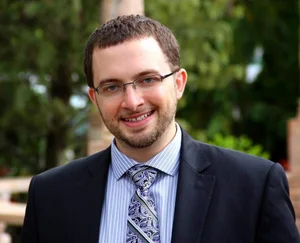
EP 110: Designing for Behavior Change | Sherine Guirguis and Michael Coleman
Learn how behavioral designers are tackling the most complex health challenges on the planet.
As a founder and lead strategist at Common Thread, Sherine Guirguis turns data into powerful narratives. She brings over two decades of experience leading large-scale behaviour change strategies to tackle public health crises. She’s helped rid the world of polio, mitigate COVID-19, end West Africa’s Ebola outbreak, and respond to the Indian Ocean Tsunami. She spent 15 years working senior behaviour change positions at UNICEF and is widely published in public health and social and behaviour change. Sherine holds a MS in Public Health from the London School of Hygiene and Tropical Medicine and a MA in International Development and Economics from Johns Hopkins University. She’s a guest lecturer at NYU’s School of Global Public Health and participates in numerous Technical Advisory Groups, including the Global Polio Eradication Initiative, PATH and the Taskforce for Global Health. Sherine lives in Barbados and loves riding horses, diving, and design in all its forms.
As a founder and lead storyteller at Common Thread, Michael Coleman ensures that people weigh in on decisions that impact and depict their lives. Through senior communications posts with UN agencies in Angola, Pakistan, and Viet Nam, and experience in social development, documentary production and international journalism, Mike has gained invaluable experience crafting people-centred narratives. Through his work in polio eradication and responding to violence against health workers in Pakistan, he learned the importance of human-centred design. Mike holds a MA in Political Communications from Goldsmiths at the University of London. He is part of a USAID and Gates initiated Community of Practice called Design for Health. He has lectured at NYU’s School of Global Public Health and served as a lead trainer for the US Center for Disease Control’s STOP Polio Program. Mike is based in Ireland, where he spends his days biking, camping, and coaching his girls’ soccer team.
Episode mentions and links:
Poland: Not settling for less than home
Zambia and Kenya: Sprinting towards a stronger workforce
Global: Tracking vaccination the fun way
Restaurants Sherine and Mike would take you to:
Follow Common Thread: Twitter | Instagram | LinkedIn
Follow Sherine: Twitter | LinkedIn
Follow Mike: LinkedIn
Episode Website: https://www.designlabpod.com/episodes/110
Episode Reflection
“we empathize, we try to listen, we understand, and then we design”
In this quote that I wanted to highlight from our conversation this week, Sherine was responding to the question about how Common Thread brings creativity to public health. Mike and Sherine explained how their group and the many people who work there were motivated by frustration. They had seen the same mistakes playing out over and over and realized that there was a better way to do public health. Sherine mentions that every project they undertake begins with research design. The idea that step one is to listen to and understand people, to gain empathy, is something that is absolutely core to the design process. To expect someone to take an intended action based upon a designed intervention, if you don’t understand them, seems preposterous to anyone in the world of design. However, it seems that this is exactly how many public health interventions have been created. In the interview, our guests point to COVID vaccines as an example of this. Scientists and most of the public health world saw technological advancement and then access to vaccines as the primary barrier. However, in many places, we saw that was not the case. The actual needs, desires, and motivations of real people on the ground were far more complex than anyone expected and so the real problem was not supply, it was design. Increasing the efficacy of public health programs needs more research design, experience design, and strategy design. We still need technological advancements, we still need access, and we still need that critical scientific data, but we also need cultural awareness, regional and hyperlocal connectivity, compelling storytelling, and of course, creativity! If you haven’t yet, be sure to check out the case studies on gocommonthread.com for some great examples of impact, creativity, and storytelling.
Written by Rob Pugliese
-
Bon Ku: On today's episode of Design Lab we are going to talk about designing for behavior change and global health.
I am Bon Ku your host. Thanks for tuning into our podcast that explores the intersection of design and health. We have two guests today from the design consultancy Common Thread.
Sherine Guirguis case is a co-founder and lead strategist at Common Thread. She turns data into powerful narrative. She brings over two decades of experience leading a large scale behavior change strategies to tackle public health crisises. She's helped rid the world of polio, mitigate COVID-19, end West Africa's Ebola outbreak, and respond to the Indian Ocean tsunami.
Sherine has spent 15 years working at senior behavior chain positions at UNICEF and is widely published in public health and social behavior change.
She holds a master's in public health from the London School of Hygiene and Tropical Medicine. And she also has a master's in international development and economics from Johns Hopkins University. She's a guest lecture at NYU School of Global Public Health. And participate in numerous technical advisory groups, including the Global Polio Eradication Initiative, PATH, and the Task Force for Global Health.
She lives in Barbados and loves riding horses, diving, and design in all its forms.
Mike Coleman is a co-founder and lead storyteller at Common Thread. He ensures that people weigh in on decisions that impact and depict their lives. Through senior communication posts with UN agencies in Angola, Pakistan, and Vietnam, and experienced in social development, documentary production and international journalism.
Mike has gained invaluable experience, crafting people centered narratives.
Through his work in polio eradication, responding to violence against health workers in Pakistan. He learned the importance of human centered design. Mike holds a master's in public communications from Goldsmiths at the University of London. He is part of a USAID and Gates Initiative, community of practice called Design for Health.
He has lectured at NYU School of Global Public Health. And it served as the lead trainer for the Us Center for Disease Controls, Stop Polio Program. Mike based in Ireland where he spends his days biking, camping, and coaching his girl's soccer team.
Visit our website at designlabpod.com. There you can see a transcript from the show, find show notes, to learn more about the guests get related links like where Mike and Sherine will take you out to eat if you visit them. There you can sign up for our newsletter each week. Our producer Rob Pugliese writes his reflections on the show. You'll get the show notes and link right into your email inbox. So you don't have to worry about missing a show. Support us in three ways, go to Apple Podcasts or Spotify. Give us five stars. Follow us and leave us a review. I really appreciate everyone who has shared the podcast with their colleagues. I got a nice email from someone living in Ireland who shares the podcast with his team.
That is how others find out about the show. That gives us the stoke to keep on producing this every week for you.
Now here's my conversation with Sherine and Mike.
Interview
Bon Ku: Sherine and Mike, welcome to Design Lab. It is an honor to have y'all on the show.
Mike Coleman: Really great to be here.
Sherine Guirguis: Thanks Bon it's an honor to be here and thank you so much for inviting us.
Bon Ku: So, an old school virus brought you together to start your company common Thread. Can you tell us about that?
Sherine Guirguis: Yeah so Mike and I met about a decade ago, which is really hard to imagine that it's been that long. We met while we were trying to eradicate polio. Before that, I was working on polio eradication in India, and India had just eliminated polio, I think it was in 2010. And I had moved over into working with UNICEF at a global level.
And at that time, Pakistan, Nigeria and Afghanistan were the last three, countries that had not yet eliminated polio. And we were looking for somebody who was ready and willing to take on the task in Pakistan, which was really, really challenging. And Mike fell for it. And that's how we met.
Mike Coleman: Yeah, at at that time , I wasn't tricked actually. I was really, really, interested in it. I mean, it was this massive global health program. As you know, it's this incredible challenge of reaching literally every child at the doorstep with an oral polio vaccine multiple times. So for like logistically even, it's incredible.
and then the complexity. And I was just sort of fascinated by a place like Pakistan, right, where there's like so many different cultures, so many different languages, religions, geographies. It was just a, an incredible challenge. Unfortunately, in 2012, the major challenge was also, a sort of unprecedented uptick in violence against health workers.
Mike Coleman: So we saw that healthcare workers, for the first time in a targeted way, to our knowledge anyway, were killed and, we wanted to
Bon Ku: Oh, I rem I remember that. That was horrific.
Mike Coleman: That's exactly the word for it. And it was something that was so unprecedented and I think Sherine and I really bonded on the fact that it felt like didn't have the answers.
You know, like this, this wasn't an answer that sat solely with public health. This was a security issue. This was a social cultural issue. This was a political issue. This was something that really had broad, layers of complexity, deep, deep layers of complexity, I should And, what I boiled down to was really kind of understanding the people.
That we were trying to get this vaccine to, which on, on the surface seems quite simple. You know, why wouldn't someone take a free vaccine, to help their children ensure their children wouldn't be paralyzed? So that's kind of how we met. That's the bond, where we started really thinking about how can we support programs like these in ways that, that recognize that complexity and those, those layer.
Bon Ku: Yeah, a lot of lessons to be learned for our current pandemic, and it's not the, this is not the first time that a virus has ravaged the, the planet, and I appreciate what you were saying, that it's just not an infectious disease public health issue. It, it is the most complex issue that really infects all parts of society and I love the work of Common Thread.
So can you tell us about what is Common Thread, what type of work you do? Who are your clients?
Sherine Guirguis: Yeah. So Common Thread is a behavioral design firm for global public health. We work for, a lot of international organizations that work on public health. In fact, leaders, of global public health globally. So, you know, we've done work for the Global Vaccine Alliance, Gavi we work with, the World Health Organization.
We work with Unicef, The Bill and Melinda Gates Foundation. done work with, save the Children, at an NGO level. And so we really work with the sort of big players that design policy, design programs and also fund a lot of ministries of health and government, health programs globally.
And I, I think, you know, one of the things, that we always say is that Common Thread was born out of frustration. And it was born out of this tension that Mike just described in Pakistan. And so, through that experience, we really realized that there was a, there was a different way that public health could be done.
And we thought we sort of touched on something when we were working together, on polio eradication. And we wanted to take that a little bit further and, and see what we could do. And that's how Common Thread was.
Bon Ku: it's a global company, right? You all are all over the planet. Can you tell us what type of person works at Common Thread?
Mike Coleman: Yeah, I can give that shot. Our team's fantastic and like any company really, the people make the magic happen. The type of person who works at Common Thread is really I think very, very driven , by wanting to. Be involved in something that has a positive impact on the world as a start, I think.
And then I think they really want to see tangible change. You know, they're not necessarily content with producing reports. Some of them may have worked for big organizations before, whether they're agencies or international organizations or design firms. So they want to sort of speak to people, listen to people, see how we can work together , and promote positive change.
The other thing I would say at the core of it is a, a real emphasis on multidisciplinarity right on this idea that, again, going back to this idea that not one single discipline is gonna solve these really, really sticky issues. So a lot of the creativity in our firm comes from those disciplines, sort of, you know, kind of rubbing up against each other.
A bit of, tension, a bit of that kind of debate and really trying to understand multiple points of view from a disciplinary point of view and building that kind of empathy, which helps us understand the complexity of the people we're trying to serve. So that's, that's definitely a unifying characteristic, I think, is we don't want there to be a single Common Thread team member from the point of view of their profile, who they are.
Bon Ku: I love that you paired creativity and public health or global public health. That's something that people don't normally associate, if you do word association. And I love the case studies that you have on your website for your company. You described three flavors of design, experience design, research design, strategy design. Can you pick one of those flavors and tell us how you use it in a project that you've done?
Sherine Guirguis: Yeah. Thanks Bon. One of the things that we really really enjoy and it really cuts across everything that we do, is research design. And that's really how we start all of our work, whether it's strategy design or experience design or storytelling. And so we always really try to listen to people first and understand people.
That's sort of one of our mottos is we, we empathize, we try to listen, we understand, and then we design. And you know, we're doing that right now in this really, really fascinating project that we're working on, in Poland to understand how Ukrainians fleeing from the Russian War, how they are experiencing services in Poland, how they experience things like sending their children to school or, going for a medical appointment or trying to find a place to live, or even the journey of the services that they encounter on the way from Ukraine to Poland or from Ukraine to another area.
And so, That's a really, really fascinating project, which Mike's been leading and he might wanna talk more about that. But we really, try to borrow from lots of different methodologies to triangulate different types of data to really understand what people see. So what, what do people think is happening at the sort of front stage of things and then what's going on behind the scenes?
And there's so many layers to that behind the scenes research. So there's behind the scenes of what's going on in people's minds and brains and their emotions. And that's really where we bring in behavioral science methods and methodologies to understand what's influencing people's sort of individual behavior.
And then we really bring in sort of like design research and service design to understand how services influence people's behavior and how different touchpoints might influence people. Making different decisions at different moments of their journey, depending on how things are designed for them or not.
And then really understanding the social context, the, you know, cultural context. And so we really layer in lots of different methods from different fields to sort of get at a very deep understanding of the person and where that person is in their environment and their context.
Bon Ku: That's a pretty intense design brief. What did your client ask you to do, like, what was their question?
Mike Coleman: Yeah, so we did a first phase last year, just a couple months after the invasion. And really it was, responding to a refugee crisis like any other refugee crisis. You know, let's get this stuff really quickly, let's get it up.
Let's get it going. Let's make sure that basic needs are met. We've got shelter and food and a, a safe place for people to be. And that was really, really important, in the sort of acute phase of the, the crisis in Ukraine. As time went on, you saw this sort of interesting, and not even a lot of time by the time we were there in May, you had Ukrainians of course going back and forth, right?
They would go be in Poland and they would go back and see their relatives. They'd go home for a birthday party, they'd go home to check on their houses. They'd go home to check on their parents, you know, and these were, in a way the services that were being designed weren't quite as nimble, in some ways to respond to those things.
So in general, that first brief was how do Ukrainians perceive the services as they're being provided and what are recommendations that we can make as we, adapt them and introduce new ones. And some of the insights coming out of there were really interesting. there were things like a real tension and discomfort amongst Ukrainians at so much generosity being given at them.
This discomfort at not being able to say thank you in a way that, that they felt maintained their dignity. You know, there were things around, recognizing that people are really oriented towards home, which is not unusual, but the value placed to Ukrainian education.
Even Ukrainian vaccine schedules versus Polish vaccine schedules. These were things that we're meeting and we were recommending be included in how services were designed. Thinking about this, the kind of multitude of journeys. There wasn't a single journey. People were going, from Poland and back and then to another country in a fourth country and then coming back and there was a lot of, variety there that was important there. So part of our, our work there, it was really rapid. It was a 10 day sprint, you know, start-to-finish kind of design, sprint where we ended up with prototypes of, intake forms. We had prototypes of the way service centers could be, could be designed in terms of how the services were prioritized and referrals were given.
We had, proposed just to test a a kind of calendar. That would allow people to promote Ukrainian festivals, events, things happening in the communities, but also give them in sort of segments of time that were manageable kind of psychologically for people three month increments that would say, this is what's happening now and this is what's happening now.
Mike Coleman: Because we heard a lot that long-term planning for Ukrainians in Poland was really difficult. It was difficult to say, what are you doing in 10 months from now? And the answer is almost always, well, hopefully the war is finished and we're home. We're back with our family. So that's just to give you a quick snapshot of that.
We're working on a second phase now where we're looking at feedback mechanisms looking at how, Ukrainians are able to give feedback how, service providers are able to process and respond to that feedback in ways that make sense. And there's this really nice confluence of a principle, I think, in, humanitarian world, which is accountability to affected populations, right? So that, those are things like, communication and transparency and participation in the services that are designed for them. Which is also the core of human-centered design and design research. So it's, it's been a really nice sort of comparing notes and, finding the best of those worlds as well to, to bring together.
Bon Ku: How is your method different from maybe other approaches when you know, this is a crisis situation. They have to rapidly develop and create services. Is this the way that's typically done in global health, or is your approach unique?
Sherine Guirguis: I think it's starting to become more mainstreams, which we're really, really excited about. And that was one of the things that we started Common Thread to try to do, is try to make our approach less unique. We really wanted to promote this as being the norm. And one of the things that we, we've seen in the last couple of years, which is, has been really positive, is that human-centered design and behavioral science thinking is shifting a little bit from an innovation kind of space.
To a mainstream space, and we're so excited about that. And, you know, more and more organizations are calling us and saying, okay, our leadership has, you know, they've bought, you know, they've drunk the Kool-Aid. They get it. They really want this approach to be mainstreams in our organization.
And so it's becoming more acceptable that this is the gold standard of how you should do the things and not a sort of nice to have if we have additional funds or if there's somebody who's interested in a different way of doing things.
Mike Coleman: I, I just add, I think there's still a bit of a tension of, you know, getting that comfort people are quite comfortable with quantitative data, you know, with looking at reams ofs of data and looking at graphs and funding a six month study that may be less relevant six months down the road than it was in an emergency context.
So I think promoting the depth that this type of rapid research can provide, and that's how we we're positioning. Obviously, human-centered design is, isn't always rapid. It could be long-term and, provide sort of that kind of longitudinal view, but in this case, we wanted to promote it as a way that was appropriate for a humanitarian response that we can say, we can talk to people in the moment.
Get feedback on some of your ideas. Here, here, new ones. Really expand our thinking on this, and get back to people. And I think the other thing that we're insisting on more and more is for example, in this case, we're working on alongside a Ukrainian UX firm because we wanna make sure that we have that.
Local knowledge, that local context that, that understanding. Similar to work we've done in, Kenya, in Ghana, Pakistan, we we're insisting on having local partners for our work and challenging this kind of, global North expert who gets helicoptered in to tell someone else how to do do things.
So we're trying to find the best of both worlds where we can.
Bon Ku: Walk us through how experience design, or strategy design look in some of your projects that you've done.
Sherine Guirguis: One really exciting project that we've been working on over the last year was in Kenya, and it started in the middle of Covid, I'd say the end of 2021.
It's all war 2021. Vaccines were just starting to, flow into global South countries. There was a lot of excitement about getting vaccines distributed more globally. And as, as still often happens in the global health space, everywhere is that, you know, there's this emphasis on supply.
And so there was, you know, a lot, we all remember the, massive interest and intensity of vaccines, you know, appropriately. So, and then there's an assumption that people are just, they're gonna take it right when the vaccine comes. It's, you know, Build it and they will come. And of course, COVID was the ultimate global experience that showed us that's not the case.
And that's a massive assumption. And of course we learned that during polio eradication, because that, that is the challenge that polio eradication had been grappling with for over a decade and still grapples with, and then it just, you know, that same problem just monumentally, magnified with Covid.
And so, we were asked to identify how do we help people in specific countries want to take the vaccine? How do we increase demand? Could you give us a strategy? And so we went in with our traditional methods of understanding the context and understanding the health system and understanding the vaccine situation and understanding all of these different elements.
And of course, in the background, the Covid pandemic was changing and it was, you know, becoming less severe and different variants were coming out. And the world around this problem was completely and dramatically shifting every single day. And so at the end of this process or in the middle of this process, we basically said, we don't think that a strategy is for Covid vaccination is really gonna have the most impact because people don't really want it anymore. They don't, it's not their most pressing, need. And so that was a really interesting and amazing example of just people's behavior realtime feeding into a strategy design. And we were so fortunate. To have a client that understood that really, really well and lived to those principles and said, well, let's figure out what people do need in their health system.
Let's figure out how to make things relevant for them and what is relevant for them. And so we started to you know, again, talk to lots of different people. And what we found was that in fact, people were really, really interested in why the Covid pandemic was such a big deal in Kenya. And it was exacerbated in all of our countries, because there were systemic issues with the health system.
And so our strategy ended up sort of pivoting from just a Covid vaccination strategy to, you know, let's look at how to prevent this, being so, traumatizing and so detrimental to people in the future. Let's look at preventing that. And so our strategy is now around these four pillars of how do you help frontline workers, for example, use data every day in their, day-to-day lives. How do you make sure that local health systems get the resources that they need when they need it? You know, people, money, partners. How do we make sure that health services are designed with the people that they're meant to serve and not for the people that they're meant to serve?
So it just changed the whole trajectory of our strategy.
Bon Ku: And I love how on your website you have just amazing storytelling around these projects, which is like great visuals and, and we're gonna link to, that in the show notes as well. And that's something that researchers, public health people, medical practitioners, we don't do a great job at. And I'm curious to know where does that storytelling aspect come from and why the emphasis on it?
Mike Coleman: Yeah. I, I think storytelling has always been central to what we do and why we want to set Common Thread up. I think we have been in the situation of sitting on a big long table and looking at a PowerPoint projector of epidemiological data and then going, okay, well that's, that's interesting.
And I have a sense that there's a group in that area and they have these demographic characteristics, but that we were always remembering. The mission where we'd meet the woman who told us about their 10 children and how they experience violence while they're out being a vaccinator, or how the healthcare workers, for example, that project that, Sherine was mentioning in Kenya, we have this, it's called the call for change and it's really about bringing this bottom up innovation from counties.
And we brought them together in a workshop just to sort of hear from them. And there became this moment where they started talking about the, the trauma of healthcare workers we're experiencing. And this group of healthcare workers were crying in the course of telling the story. And that of all things in that workshop is the thing that's stuck with people really, really strongly.
And it's just human nature. It's just more powerful, isn't it? To sometimes , speak to the massive, numbers and data and their graphs through single stories, through single communities.
Bon Ku: You can't capture that in a data set or PowerPoint.
Mike Coleman: No, we sometimes say we're, we're trying to find the people sort of hiding behind the, the graft, you know, and then to be honest, there's two ways we do that. One is to really kind of eek out what we to sort of refer to as social data. Like even in epidemiological data. What, are the sort of personas we can construct out of gender, out of socioeconomic status, out of language, tribe?
And what does that tell us? And then even further, that, that texture that you get from speaking to people and understanding them and giving them a voice in a way that's not kind of extractive. We're not trying to, you know, kind of get someone's story in order to, use it for our own purposes, but rather to express a problem through, through a single voice, a single story, in order to make a larger point, that it's human nature just tends to stick with us more strongly.
Mike Coleman: And, sometimes it's the entry point as well for us to get into the more complicated things. But we've always found it to be a, a powerful tool. can you describe what a persona is? Designers use personas a lot. And I see you use it in a lot of your case studies. Yeah. And what, what is a persona in the context of your work for those listening who may not know what that is?
for us, we use personas in a number of different ways. They're always research based. We don't generally use assumption based, personas that are not based on either things we've read, or people we've talked to.
It's usually a blend of the, the two things we've seen personas for us are ways to, sort of segment groups, the people, the, the context in ways that are manageable, that are memorable and that provide us sometimes with a shorthand to deal with particular, specificities of a strategy or an approach.
we occasionally, and, and there is debate, I think probably of the effectiveness of, of personas sometimes, like how, heavily they're leaned on versus as a, as a sort of facilitating tool. We use them in the backend sometimes just to help our, our teams to kind of understand ways to collate our research and and to bring, some of that data together in a way that's, that's more digestible, that becomes a shorthand for our team.
Mike Coleman: In other cases, it's more client facing. one very practical way we used it recently is, is building out a, um, a kind of social behavior change toolkit and and program guidance. And it was in this huge international organization and just trying to understand who needs to use this thing.
Bon Ku: Was that the one for UNICEF or was that
Mike Coleman: yeah, exactly.
So UNICEF's going through this, this sort of, change process where they're really emphasizing a broadening of the social, social change and behavior change, disciplines and strategies that they're using, which, which they've always used, but it's. Really emphasizing and, and raising up some of those emerging areas, like behavioral science and human-centered design, but then making it digestible for everyone from someone who might be managing, a program at Unicef to the person who has to implement the program at a subnational level.
So these were just used to understand, okay, we need to understand a donor, we need to understand, someone who runs a program. We need to understand the, the practitioner. And so that became a way for us to organize the research. And Sherine if you wanna add to that.
Sherine Guirguis: I think what's interesting is what we try to do sometimes, personas are segmented by demographic or by user or by gender. And so you'll often see, well, you know, here's a female persona, or here's a consumer persona. And one of the things we really try to do when we blend the behavioral science and human-centered design approach is, for example, our personas might be segmented by behaviors. And so you might see different behavioral personas. And so this is how, this persona behaves these are their interests and we always try to blend a mix of their behavior with, you know, their context. And so, this persona, you know, here's Bon's persona. Here’s his journey, as a medical practitioner, but hey, he also really loves to surf.
Understanding those things about the full person allow us to be creative and find entry points that you wouldn't normally find through traditional data collection methods or just through these quantitative data points that we were talking about earlier.
Bon Ku: I love that you are self-described as behavioral designers. I'm gonna put on my skeptic hat, and if I am a healthcare administrator, a public health researcher, a medical doctor, and I come across you all and I go, why why the heck do we need behavioral designers? What is freaking behavioral design? I'm the expert here. Why do we need to work with you all? What value add can you give to our project?
Sherine Guirguis: We're very familiar with that skeptical.
Mike Coleman: That's like, that's like right on
Bon Ku: This is a, this is a softball here,
Mike Coleman: Yeah.
Sherine Guirguis: This is our day to day. That's like, Hey, that's 8:00 AM. no, it's a great question and it's, why we were created I think in large public health programs that literally was our day-to-day, you know, there would be 25 epidemiologists in the room or virologists. And then there would be one behavioral scientist around the table who had to carry the entire field, you know, on their shoulders and convince an entire room why, why this field was important.
And that's exactly what we're trying to change, is we're trying to at least get to a level where there's, you know, 12 and a half behavioral scientists and 12 and a half epidemiologists and, that one, that half person could be possibly one whole person who understands the importance of both.
And so I think one of the things that we always find in public health is that these meticulous, researched evidence-based programs and policies get designed, and it's like, this is what the science says is supposed to happen. You know, this vaccine is going to save the world, or this is going to eliminate disease and morbidity and mortality and all these amazing things, and then epidemiologists get frustrated because people get in the way and they're like, no, people are ruining the best laid plans. This is perfect and that happens everywhere, right? In every field. Public health is, is no different, but public health really has exceptional, you know, epidemiology to me is the most fascinating science because it can be used for so many different things, and it's such a, it's such a powerful science to target.
Sherine Guirguis: To design to really be very specific. And it breeds a lot of frustration when people don't do what you expect them to do. And so our field sort of takes that problem, and I'm doing air quotes, you can't see me. But it takes that problem and turns it into an opportunity and to say, well, you know, people get really frustrated that people aren't behaving in the way that we think they should be.
But actually when you start to understand that. People are actually the solution and that's the opportunity that's missed so many times in public health.
Bon Ku: It kind of reminds me of economics where these economic theories are based upon assumption that people behave rationally, but people don't behave RA rationally in these market driven forces. Right. That's why the whole field of behavioral economics, I think got very popularized.
Mike Coleman: I think that's exactly it. I mean, we, we sometimes say we design for services for how people actually are not for how we wish they were or want them to be. And I think, you know, you could go on the practical level, if we do this, understand this, this complexity in advance, this will save you time, this will save you money.
This will be more efficient and appeal there. I also wonder, and it'd be interesting to get your reflection on this Bon I mean, I know there's moves to like whole person health. You know, where we look not just at the disease side or at a particular kind of component of health or risk, but behavior, lifestyle, socioeconomic background even, and trying to understand that.
And I feel like this in a way is, is aligned with that. It's kind of saying you want to deliver this service in a way that. In some way, if not ignores, maybe minimizes the reality in which we all live and the way we actually make decisions and the way we weigh up this versus that, you know, going surfing versus going to the, to the doctor for a checkup.
So I don't know. It sort of feels like it's one of these recognitions that, that we're all coming to that, that it's, it's hard and these sort of discreet siloed approaches are, can get us to that. You know, polio is a great example. Got us to 90.
Bon Ku: Mm-hmm.
Mike Coleman: that 10% has been really, really hard, and that's a human problem.
That's not a science
Bon Ku: problem
Health is so hyper-local that what works for the population of Philadelphia where I practice medicine is totally different from London or in Seoul, South Korea, but even within Philadelphia, what works in South Philly may not work in North Philly and what works for ver particular community in north Philly may be different from three blocks where it's a totally different ethnic makeup for that community. Yeah, so it's so, so complex. Oh gosh. I have so many more questions here, but I, I want to get to a couple, one personal question for both of you Sherine and Mike. Did you, as a kid, did you grow up thinking, I wanna be working in behavioral design and work on eradicating diseases like polio?
Like what was your personal journey to get into this space? Because I imagined this isn't non exist when you were younger and then you are literally creating the space that you are working
Sherine Guirguis: in
Yeah, that's a great question. we have a lot of. colleagues on our team , that have studied behavioral design, and Mike and I are always envious of the programs that they, that they get to go to. And I, I always wish I could, just rewind 20 years and these academic programs would've existed when I was there.
Maybe I just didn't know about them. But my journey, was really haphazard into this space. The only sort of, I guess clear path was I was a big nerd when I was about 15 or 16 and I was part of the Model UN team at my school. My school had a Model UN team and I loved it. And it was basically a debate club where you could
debate global issues and represent different countries. And I loved it. I thought, this is what I wanna do with my life. I had no idea what the UN actually looked like or what it entailed, but I always had this dream of potentially working for the UN and so I pursued that. And then I started working for the UN and just fell into public health.
it's not something that I studied, but I had this amazing mentor when I started working, and he was a public health nutritionist. And one of the things that he told me was nutrition is behavior change. Everything about good nutrition is behavior change. And I had never thought about public health that way. And so that was my first exposure into social and behavior change and each time in my career I just fell into social and behavior change, which is pretty good indication that it is literally the core of everything we do in public health, cuz I always thought I was doing something else and that I ended up doing social and behavior change. So after that, I went to work, in the Maldives, after the Indian Ocean Tsunami and started doing data collection and communication and then realized that that was also social and behavior change because we were looking at how to understand people that had just experienced this traumatic event.
And then from there I went into polio eradication and thought I was getting into public health, and then found myself at the center of the largest social and behavior change program in the world. So it's always been possibly something I've just fallen into. And then I guess at some point I just, you know, I just threw up my hands and accepted that this was gonna become the core of my career as opposed to, you know, a tangential part of my career.
So here I am,
Mike Coleman: Yeah. I mean, I, I guess for me, let, lemme just start out by making a real. I guess plea for the value of people like, I think me, I'll say, I don't wanna say sheen. She has this great public health background and a lot of experience, but for this kind of passionate, enthusiastic generalist who works with specialists, And experts.
You know, I think the blend can be really, really powerful of being comfortable to ask stupid questions. Again, air quotes that no one can see. , being comfortable with, drawing from sort of a, a multiplicity of backgrounds and, and interests and, and bringing that to the table, along with people who have that specialization.
That, that to me you know, a Common Thread, something we're always striving for. Again, that balance, right of expertise. People who can, you know, understand these things backward than forwards. And those people who are able to infuse those same ideas with, new ways of thinking and points of view. So soapbox stepping off.
But beyond that, as a kid, what did I wanna do? I think I wanted to be an archeologist actually. To be an archeologist and then a writer. And I thought, well, I can't make money as a writer, so I'll study journalism. So I studied journalism and, and worked for a while and as a journalist, including, doing some work, in and around Canada where I'm from, but then just thought, okay, I need a break. This was only after two years, so I don't know what I was thinking, but, I took a volunteer program, in Poland actually, coincidentally, which at that time hadn't, wasn't part of the EU was still kind of, had a bit of a communist hangover was around 90, 98 and I worked for a, a state run seniors home and home for people with developmental disabilities, just as a volunteer.
Mike Coleman: So it's like totally different, but I just felt the exposure to a different place, a different language, a different culture, and then feeling like I was at least in some way using my limited energies and talents. To help other people that, that just really felt, felt right to me. and then, so I just sort of started pursuing the international space worked as a journalist in Honduras for a while.
Went to Sri Lanka while the Civil War was still going on working for an NGO there, and then tried to go back to Canada and get a grownup job and, and failed in that. So it went back to my first UN job was with, the UN and Vietnam, and, that would've been my first real exposure to public health, I think was a bird flu outbreak. Really seeing the limitations of what we were doing, which was, being on a kind of an external communication side of the table on the marketing side, I guess, was, you know, putting messages out, putting information out, and just very clearly seeing the limitations of, of a message where you say, hey, don't touch sick or dead poultry and just make sure you kill your entire flock to people who had, you know, who had no, no a form of, uh, a way to make money.
And, and didn't really understand the applications of what we were being asked, but it was this very kind of, Top-down approach to that. So that just seemed interesting to me. And I started studying, behavioral, science and, and communications applied in a behavioral sort of way to influence people's work.
Bon Ku: And then, yeah, just a few other places, Angola for a while. And then Poland and then we, we know the story from there. So just getting, getting into polio eradication and seeing that, that potential, it just really felt like an opportunity that there was a gap there, that we could try to try it in our own small way. Incredibly diverse careers. Mine is so boring. I went to med school residency working in a hospital.
Mike Coleman: So jealous
Bon Ku: I'm jealous of, the background that you both have. If a listener were to come visit you, Sherine and Mike, where would you take them out to eat?
Sherine Guirguis: That's a great question. Well, I've just recently moved to Barbados, just three months ago. So come visit. I've been having a lot of fun exploring lots of different places. So you can ask me this question again in six months Bon I might have a different answer for you. So far, so far there's this incredible restaurant called Local and Company.
It's, uh, one of the few farm to table restaurants in Barbados. And not only is it farm to table, but it's farm to table, just flat in front of the ocean and it's the most incredible view. They change their menu seasonally, and you guys should all come visit me in Barbados and I'll take you there.
Bon Ku: That looks incredible. We'll put a link to that in the show notes. I love the food in Barbados been surfing there a couple of times, and, oh, the place looks amazing. What about you, Mike?
Mike Coleman: It's so boring in comparison. I feel like if any anyone comes to Ireland, they wanna see a pub, so I think I should take 'em to a pub. Would be called a proper pint of Guinness. usually served with a, a pack of, uh, as they'd say, cheese and onion crisps, you know, like a chip chips.
So there's a pub, in my neighborhood called Birchalls which is great. Just a nice casual kind of pub with a, with a fireplace and just a real neighborhood place. In terms of maybe a restaurant though, I've been, mostly vegetarian for maybe seven or eight years. And, there's a place called Glas in Dublin that is G L A S, which is, just a really excellent, vegetarian place, great food, nice atmosphere, and, and right in the city center.
So that's
Sherine Guirguis: You never took me there, Mike.
Mike Coleman: Actually, I took, I took Shrine to a place that was a lovely restaurant and as, as I was waiting for like , the fight broke out right in front of us and I thought, oh no, this
Sherine Guirguis: Is it a place he
Mike Coleman: Advertisement
Sherine Guirguis: I don't get, I don't get taken to Glas.
Bon Ku: Well, I hope to visit both of you one day and eat at both these amazing places. Thanks for coming on the Design Lab podcast.
Sherine Guirguis: for having us Bon. It's been
Mike Coleman: Yeah, it's been great fun. Thanks a lot.
Bon Ku: Go to the podcast show notes, learn more about the case studies that Sherine and Mike had mentioned and follow Common Thread on Twitter and Instagram. Their handle is G O c O M M O N T H R E a D. And reach out to me on Twitter at B O N K U on Instagram at D R B O N K U. Design Lab is produced by Rob Pugliese, editing by Fernando Queiroz. Our theme music was created by Emmanuel Houston and they cover design by Eden Lew. See you next week.